

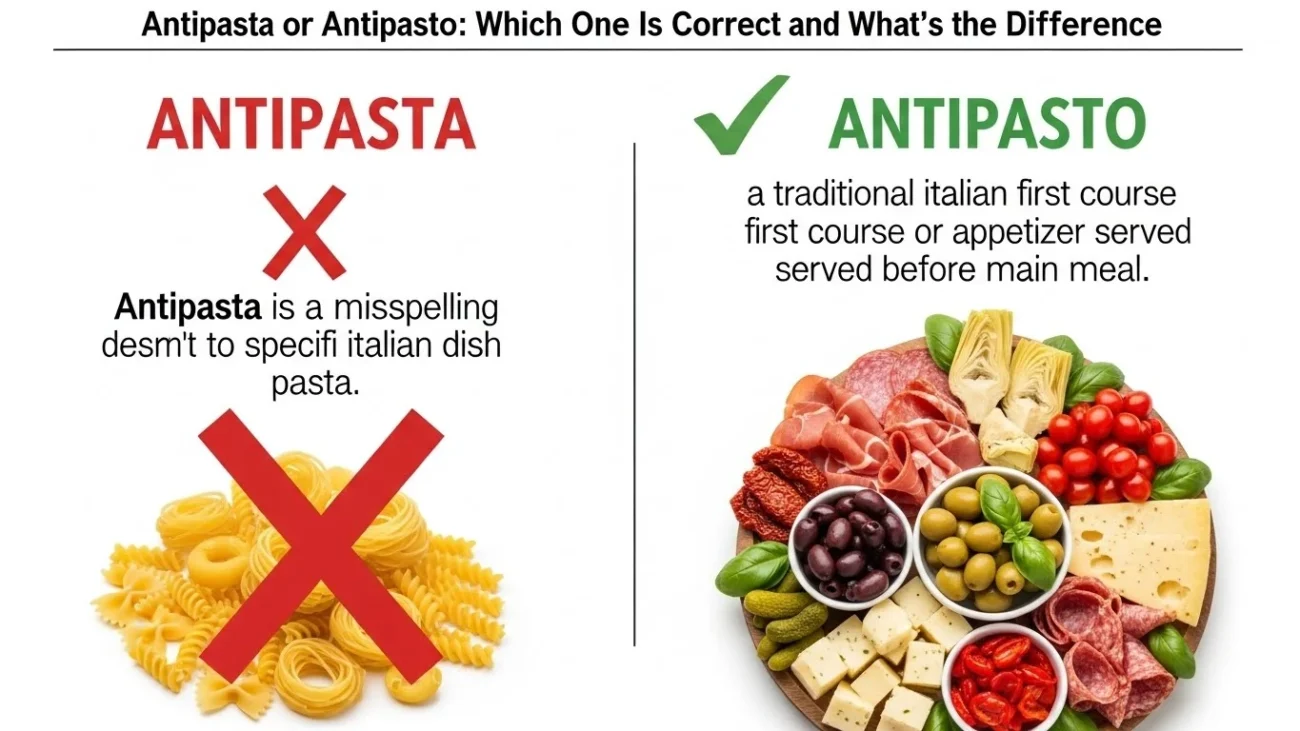
Many people search for antipasta or antipasto when ordering Italian food, writing menus, or reading recipes. The confusion is understandable.
These two words look almost the same, sound similar, and are often used incorrectly online. One small letter changes the meaning and sometimes makes the word completely wrong.
I’ve seen restaurant menus, food blogs, and even social media posts using antipasta when they actually mean antipasto.
This usually happens because people assume pasta is involved, but that assumption leads to an error. In Italian cuisine, the meaning is very specific.
This article clears the confusion in a simple way. You’ll get a quick answer, then learn the origin of both words, understand British vs American usage, avoid common mistakes, and see real-life examples.
By the end, you’ll confidently know whether to use antipasta or antipasto and why only one of them is usually correct.
Antipasta or Antipasto :Quick Answer
✅ Antipasto is the correct word for an Italian starter or appetizer.
❌ Antipasta is usually incorrect and often a mistake.
Examples:
- We ordered an antipasto platter before dinner.
- The meal began with antipasto, cheese, and olives.
👉 Italian appetizer → Antipasto
👉 Antipasta = commonly an error
Discover More Article:Wearing or Waring:Meaning, Difference and Which One Is Correct?
The Origin of Antipasta or Antipasto
Antipasto comes from Italian:
- anti = before
- pasto = meal
So, antipasto literally means “before the meal.” It refers to the first course in Italian dining, often including meats, cheese, olives, and vegetables.
Antipasta looks like it should relate to pasta, but in standard Italian and English usage, it is not correct in this context. While pasta is an Italian word, antipasta is not the correct culinary term for an appetizer.
The confusion exists because:
- Pasta is well known
- Antipasto looks unfamiliar
- English speakers guess the spelling
British English vs American English Spelling
There is no spelling difference between British and American English for this word.
| Aspect | British English | American English |
| Correct term | Antipasto | Antipasto |
| Incorrect usage | Antipasta ❌ | Antipasta ❌ |
| Meaning | Italian appetizer | Italian appetizer |
👉 This is not a regional spelling issue. It’s about correct Italian usage.
Which Spelling Should You Use?
Always use antipasto when referring to Italian food.
- US audience → Antipasto
- UK/Commonwealth → Antipasto
- Menus, blogs, recipes → Antipasto
Professional tip:
If you’re unsure, remember that antipasto has nothing to do with pasta.
Common Mistakes with Antipasta or Antipasto
❌ The restaurant served antipasta before dinner.
✅ The restaurant served antipasto before dinner.
❌ Antipasta includes olives and cheese.
✅ Antipasto includes olives and cheese.
❌ Antipasta platter
✅ Antipasto platter
Memory trick:
- Antipasto → before the meal
- Pasto ≠ pasta
Confusion between antipasta or antipasto is common in menus, food blogs, and Italian recipes. Antipasto is the correct Italian term meaning “before the meal,” while antipasta is usually a spelling mistake. Using the correct word improves accuracy, credibility, and professional food writing.This distinction also helps avoid menu confusion, improves search rankings, and shows cultural accuracy when discussing authentic Italian cuisine.It also enhances reader trust, clarity, and professional presentation across food-related content.
Antipasta or Antipasto in Everyday Examples
Menus
- Chef’s special antipasto platter.
Food Blogs
- Start your dinner with a classic Italian antipasto.
Social Media
- Homemade antipasto night 🍷🧀
Formal Writing
- The traditional Italian meal begins with antipasto.
Antipasta or Antipasto : Google Trends & Usage Data
Search trends show:
- Antipasto is far more popular worldwide
- Antipasta appears mainly in “which is correct” searches
- High confusion among non-Italian speakers
Top regions searching this keyword:
- United States
- United Kingdom
- Australia
- South Asia
👉 Most users search this term to avoid menu and writing mistakes.
Comparison Table: Antipasta vs Antipasto
| Feature | Antipasto | Antipasta |
| Correct term | ✅ Yes | ❌ No |
| Meaning | Italian appetizer | None (common error) |
| Origin | Italian | Misinterpretation |
| Used in menus | Yes | No |
| Professional writing | Yes | No |
FAQs: Antipasta or Antipasto
1. Is antipasta a real Italian word?
No, not in this food context.
2. Does antipasto include pasta?
Usually no. It’s served before pasta.
3. Why do people say antipasta?
Because they assume it relates to pasta.
4. Is antipasto singular or plural?
It is singular. The plural is antipasti.
5. Is antipasto used in US and UK English?
Yes, exactly the same way.
6. Can antipasto be vegetarian?
Yes, it can include vegetables and cheese.
7. Is antipasto formal Italian dining language?
Yes, it’s a standard culinary term.
Conclusion
The confusion between antipasta or antipasto is common, but the correct choice is clear. Antipasto is the proper term for an Italian appetizer served before the main meal.
Antipasta, despite how it looks, is usually just a spelling mistake.There is no British or American spelling difference here, and the word has nothing to do with pasta.
Understanding this distinction is important for menus, food blogs, recipes, and professional writing. Using the correct term shows accuracy, cultural awareness, and professionalism.
Once you remember that antipasto means “before the meal,” you’ll never confuse it again.

I am Sidney Greenbaum, a linguist who studied how English is actually used, not just how it is taught. I analyzed sentence structure and word differences to make English clearer and more practical. My research helped learners understand real-world English comparisons.