

Many people search for caretaker or caregiver because both words describe someone who looks after others, yet they are not always interchangeable.
The confusion is common in healthcare, elder care, job ads, resumes, and everyday conversation. Choosing the wrong word can change the meaning or sound unprofessional.
I’ve seen job listings ask for a caretaker when they actually need a caregiver, and families describe a nurse as a caretaker when caregiver is the clearer choice.
This happens because both words share the idea of care, but they focus on different types of responsibility.
This article clears the confusion in a simple, direct way. You’ll get a quick answer, then learn the word origins, British vs American usage, common mistakes, real life examples, and expert advice.
By the end, you’ll confidently know when to use caretaker and when caregiver is the better option.
Caretaker or Caregiver : Quick Answer
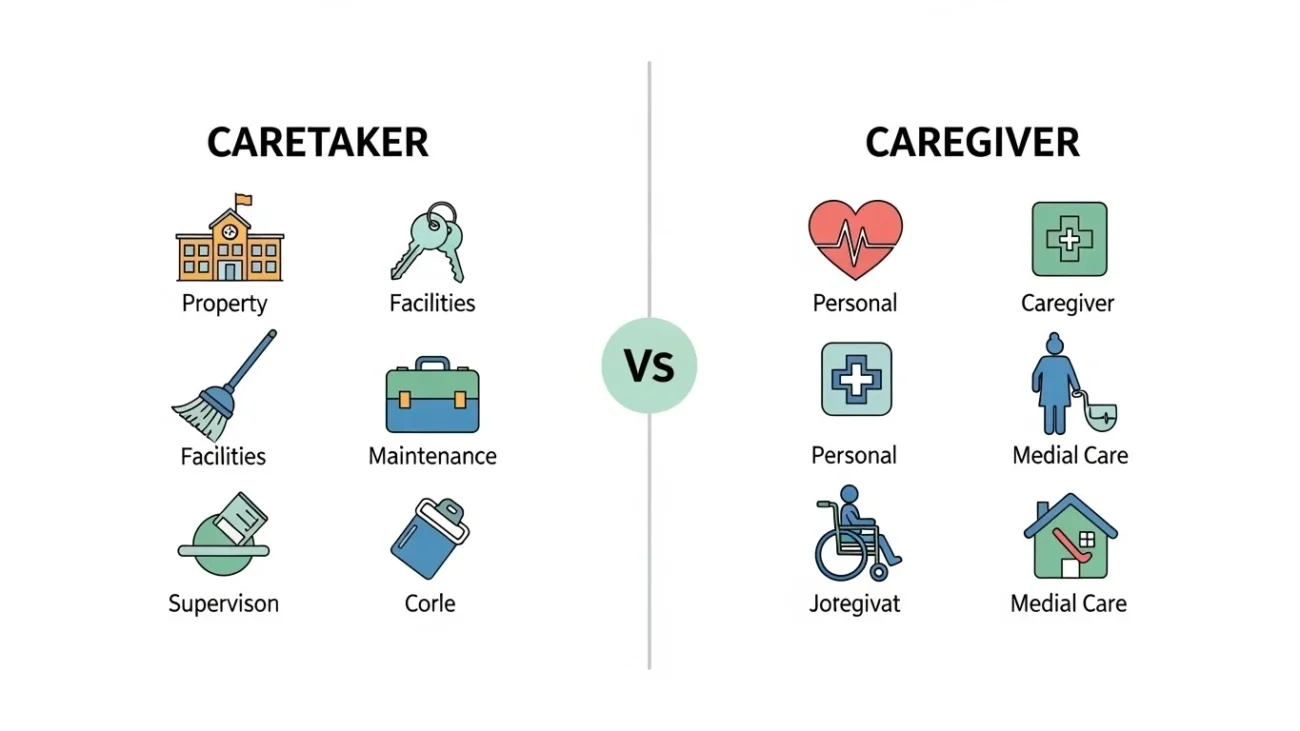
Caretaker looks after places, property, or sometimes people.
Caregiver looks after people, especially those who need medical or personal care.
Examples:
- The school caretaker locks the building at night.
- She is a full-time caregiver for her mother.
👉 Buildings or maintenance → Caretaker
👉 Health or personal care → Caregiver
Read More: Genius or Genious : Which Spelling Is Correct and Why?
The Origin of Caretaker or Caregiver
Caretaker comes from the idea of taking care of something. Historically, it referred to someone who maintained houses, estates, or buildings. Later, it was sometimes used for people who watched over others, especially children.
Caregiver is a newer term. It developed with modern healthcare and social services to describe someone who provides emotional, physical, or medical care to another person.
The confusion exists because:
- Both include the word care
- Both describe responsibility
- Meanings overlap slightly
But their focus is different.
British English vs American English Spelling
Usage differs more than spelling.
| Aspect | British English | American English |
| Caretaker | Very common | Common |
| Caregiver | Less common | Very common |
| Healthcare use | Caretaker sometimes | Caregiver preferred |
👉 In the US, caregiver is the standard term for people care.
Which Spelling Should You Use?
Choose based on role and audience.
- US healthcare & jobs → Caregiver
- UK property or schools → Caretaker
- Medical or personal care → Caregiver
- Buildings or facilities → Caretaker
Professional advice:
When writing resumes or job ads, caregiver sounds more modern and specific.
Common Mistakes with Caretaker or Caregiver
❌ She is a caretaker for hospital patients.
✅ She is a caregiver for hospital patients.
❌ The caretaker helped with daily medication.
✅ The caregiver helped with daily medication.
❌ The caregiver repaired the building.
✅ The caretaker repaired the building.
Memory trick:
- Caregiver → gives care to people
- Caretaker → takes care of things
Another important distinction between caretaker and caregiver is the emotional and professional expectation attached to each role. A caregiver is often trained, certified, or experienced in providing personal support such as bathing, feeding, mobility assistance, or emotional care. This term is widely used in hospitals, nursing homes, home care services, and disability support programs.
Caretaker, however, usually emphasizes responsibility for maintenance, safety, and supervision rather than hands-on medical care. For example, a building caretaker ensures cleanliness and security, while a caregiver ensures comfort and well being. In professional communication, especially resumes, contracts, and job descriptions, choosing the correct word avoids confusion and sets clear expectations.
Using caregiver for people-focused roles signals compassion, responsibility, and modern healthcare standards. As care related jobs continue to grow globally, understanding this difference helps you sound accurate, professional, and trustworthy in both written and spoken English.
Caretaker or Caregiver in Everyday Examples
Healthcare
- The caregiver assists with daily activities.
School
- The caretaker cleans the classrooms.
Family
- He became a caregiver for his father.
Property
- The caretaker manages the estate.
Caretaker or Caregiver : Google Trends & Usage Data
Search trends show:
- Caregiver dominates in the US
- Caretaker is searched more in the UK
- High confusion in job-related searches
Common contexts:
- Elder care
- Disability support
- Property management
👉 Users mostly want correct professional wording.
Comparison Table: Caretaker vs Caregiver
| Feature | Caretaker | Caregiver |
| Main focus | Property or supervision | Personal or medical care |
| Used for people | Sometimes | Always |
| Healthcare usage | Rare | Very common |
| US preference | Less | More |
| UK preference | More | Less |
FAQs: Caretaker or Caregiver
1. Are caretaker and caregiver the same?
No, caregiver is more people-focused.
2. Which word is better for elder care?
Caregiver.
3. Is caretaker outdated?
No, but it’s less common in healthcare.
4. Can a caregiver be unpaid?
Yes, family caregivers are common.
5. Is caretaker used for buildings?
Yes, very often.
6. Which word should I use on a resume?
Caregiver, for people-care roles.
7. Do British and American English differ?
Yes, in usage preference.
Conclusion
The difference between caretaker or caregiver lies in what or whom is being cared for. A caretaker usually looks after property, buildings, or facilities, while a caregiver focuses on people who need physical, emotional, or medical support.
There is no strict spelling conflict, but usage varies by region and profession. In modern English especially in healthcare and job settings caregiver is the clearer and safer choice.
Use caretaker when the role involves maintenance or supervision of places. Understanding this distinction helps you communicate accurately and professionally.

I am Sidney Greenbaum, a linguist who studied how English is actually used, not just how it is taught. I analyzed sentence structure and word differences to make English clearer and more practical. My research helped learners understand real-world English comparisons.