

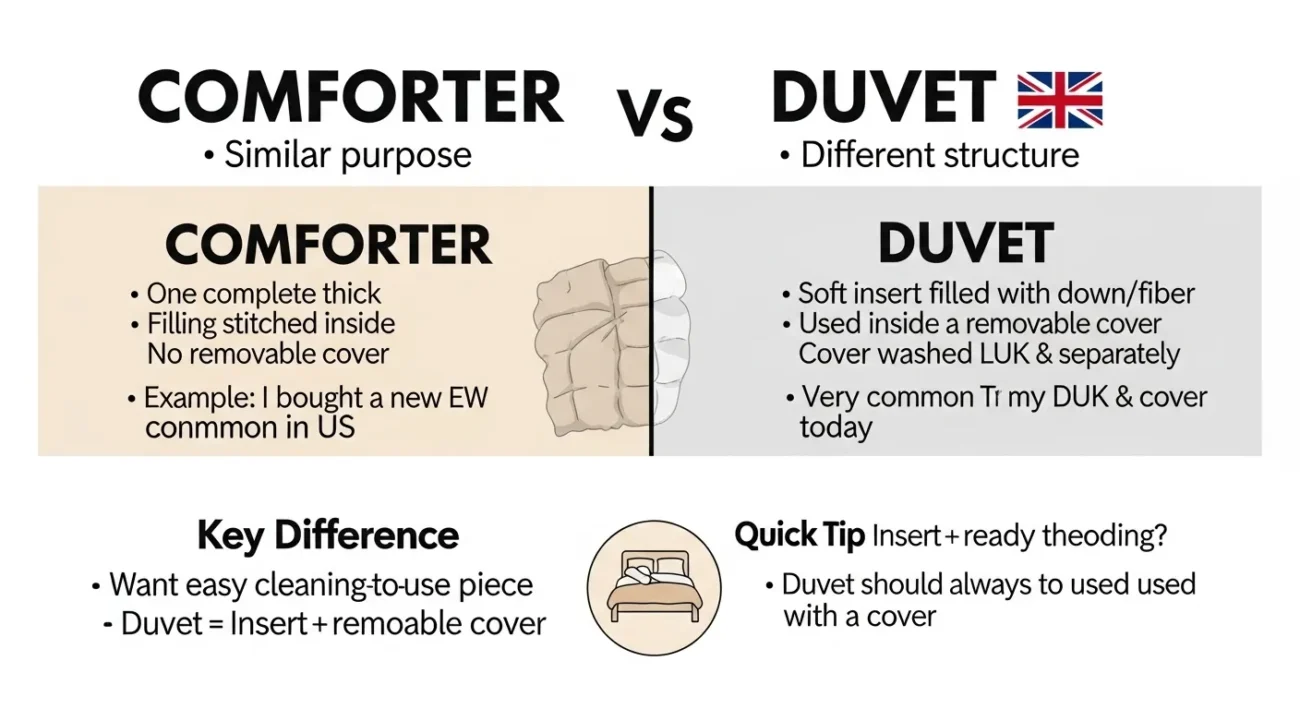
The Short answer is : Comforter and duvet are both thick bed coverings, but they are not exactly the same.
I remember walking into a bedding store and asking for a comforter. The salesperson replied, “Do you mean a duvet?” That moment made me realize how confusing these two words can be. Many people search “comforter or duvet” because they want to know which one to buy, whether there is a British vs American difference, and which option is better for their home.
In this complete guide, I will clearly explain the meaning, differences, origin, pros and cons, common mistakes, and how to choose the right one.
Comforter or Duvet: Quick Answer
👉 Comforter = A thick, quilted blanket filled with synthetic fiber or down, ready to use.
👉 Duvet = A soft flat bag filled with down or feathers, used with a removable cover.
The main difference is this:
- A comforter is one complete piece.
- A duvet has two parts: the insert + the cover.
What Is a Comforter?
A comforter is a thick, fluffy blanket stitched closed on all sides. The filling inside is usually:
- Polyester
- Cotton
- Down feathers
- Down alternative
It comes ready to place directly on the bed. You do not need a separate cover.
Comforters are popular in the United States. They often come as part of a “bed-in-a-bag” set that includes pillowcases and sheets.
Example:
- I bought a new comforter set for winter.
What Is a Duvet?
A duvet is a soft insert filled with:
- Down feathers
- Wool
- Synthetic fibers
It is designed to be placed inside a removable cover called a duvet cover.
The word “duvet” comes from French and means “down.” Duvets are very common in Europe.
Example:
- I changed my duvet cover to match the new curtains.
Comforter vs Duvet: Key Differences
| Feature | Comforter | Duvet |
| Structure | One single piece | Insert + cover |
| Cleaning | Wash whole item | Wash cover only |
| Style Change | Harder to change look | Easy (change cover) |
| Popular In | USA | Europe |
| Thickness | Medium to thick | Varies by insert |
The duvet offers more flexibility, while the comforter offers simplicity.
British English vs American English Usage
The main difference is cultural preference.
- In the United States, people commonly say “comforter.”
- In the United Kingdom, people more often say “duvet.”
However, both words are understood globally.
| Word | United States | United Kingdom |
| Comforter | Common | Less common |
| Duvet | Used but less common | Very common |
The spelling does not change, but preference does.
Which One Should You Choose?
It depends on your needs.
Choose a Comforter If:
- You want something simple and ready to use.
- You do not want to buy extra covers.
- You prefer decorative stitched designs.
Choose a Duvet If:
- You want easy washing.
- You like changing bedroom style often.
- You prefer European-style bedding.
Personally, I prefer a duvet because I can easily wash the cover and switch designs without replacing the entire bedding.
Pros and Cons
Comforter Pros:
- Easy to use
- No extra cover needed
- Often decorative
Comforter Cons:
- Harder to wash
- Style cannot be changed easily
Duvet Pros:
- Easy to clean (wash cover only)
- Flexible style options
- Often fluffier
Duvet Cons:
- Cover can shift inside
- Requires extra purchase
Common Mistakes with Comforter or Duvet
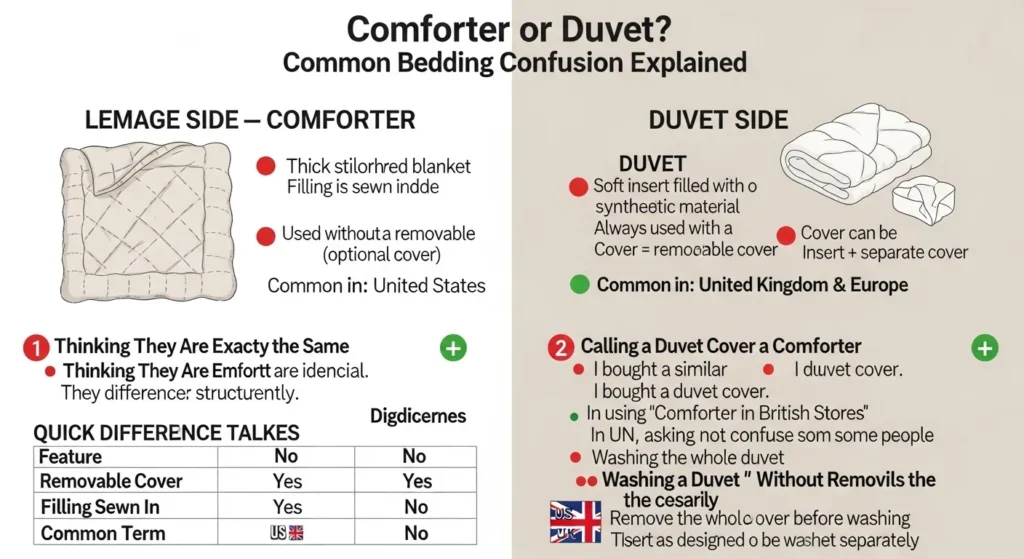
Mistake 1: Thinking they are exactly the same
❌ Comforter and duvet are identical.
✅ They are similar but structured differently.
2) Mistake: Calling a duvet cover a comforter
❌ I bought a comforter cover.
✅ I bought a duvet cover.
Mistake 3: Using comforter in British stores
In the UK, asking for a comforter may confuse some people. “Duvet” is more common there.
Mistake 4: Washing a duvet without removing the cover
Always remove the cover before washing.
Duvet or Comforter in Daily Usage
In Shopping:
- This comforter is on sale.
- We need a new duvet insert.
Interior Design:
- A white duvet gives a hotel-style look.
- Patterned comforters add color to a room.
In Hotels:
Most hotels use duvet systems because covers are easier to wash between guests.
Popularity and Trends
Search trends show:
- “Comforter” is searched more in the United States.
- “Duvet” is searched more in the UK, Canada, and Australia.
Seasonal searches increase during:
- Winter
- Back-to-school season
- Home renovation periods
People also search:
- comforter vs duvet
- difference between comforter and duvet
- duvet insert vs comforter
The confusion remains common worldwide.
FAQs
1. Is a duvet the same as a comforter?
No. A duvet has a removable cover. A comforter does not.
2. Which is warmer?
Both can be warm, depending on filling.
3. Is duvet British?
Yes, the term is more common in British English.
4. Can I use a comforter without a cover?
Yes.
5. Can I use a duvet without a cover?
Technically yes, but it is not recommended.
6. Which is easier to clean?
A duvet is easier because you wash only the cover.
7. Which looks more modern?
Many people prefer duvets for a clean hotel-style look.
8. Is the price different?
Prices vary depending on material and brand.
Conclusion
Comforter and duvet may look similar, but they are not the same. I once thought they were interchangeable until I learned about the removable cover system. That small detail makes a big difference.
A comforter is simple and ready to use. A duvet is flexible and easier to maintain. The choice depends on your lifestyle and preference.
There is no spelling difference between countries, but usage preference varies. Americans usually say comforter, while the British say duvet.
Now, when someone asks “comforter or duvet?”, you can confidently explain the difference and choose the best option for your bedroom.
Discover More Articles:

I am Sidney Greenbaum, a linguist who studied how English is actually used, not just how it is taught. I analyzed sentence structure and word differences to make English clearer and more practical. My research helped learners understand real-world English comparisons.