

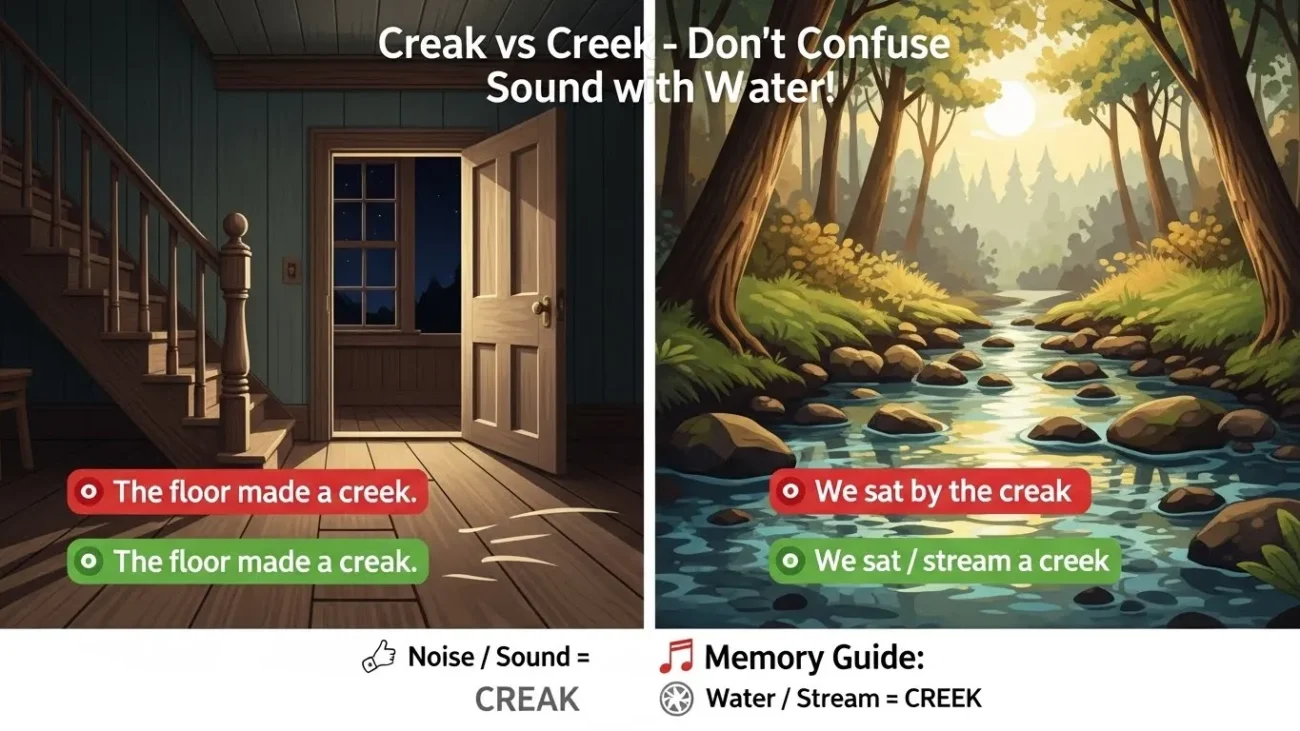
Many people search for creak or creek because these two words sound almost identical but have completely different meanings.
Using the wrong one can confuse readers, especially in writing about nature, houses, or sound effects.
The confusion often comes from phonetic spelling or mishearing the word. This article clears the confusion simply and clearly.
You’ll get a quick answer, learn the origin, see common mistakes, everyday examples, and expert advice.
By the end, you’ll confidently know when to use creak and when creek.
Creak or Creek : Quick Answer
- ✅ Creak → verb or noun; a squeaking or groaning sound, usually from doors, floors, or hinges
- ✅ Creek → noun; a small stream or waterway
Examples:
- The old door will creak if you push it too hard.
- We went fishing by the creek last weekend.
👉 Squeaking sound = creak
👉 Small stream = creek
Read More: Mean vs Meant: Which One Is Correct in English?
The Origin of Creak and Creek
- Creak comes from Middle English creken, meaning to make a harsh noise. It’s used for sounds made by moving objects, usually old or wooden.
- Creek comes from Old Norse kriki, meaning nook or corner, later used in English to describe small waterways.
Although they sound similar, their meanings and uses are completely different.
British English vs American English Spelling
- Creak is the same in British and American English.
- Creek is the same in British and American English.
| Word | British English | American English |
| Creak | ✅ Same | ✅ Same |
| Creek | ✅ Same | ✅ Same |
👉 No regional difference; context determines meaning.
Which Word Should You Use?
Use creak when:
- Talking about noises from doors, floors, chairs, or hinges
- Describing sounds in stories or sound effects
Use creek when:
- Referring to a small stream, river, or waterway
- Discussing nature, fishing, or landscapes
Tip: Sound = creak; water = creek.
Common Mistakes with Creak or Creek
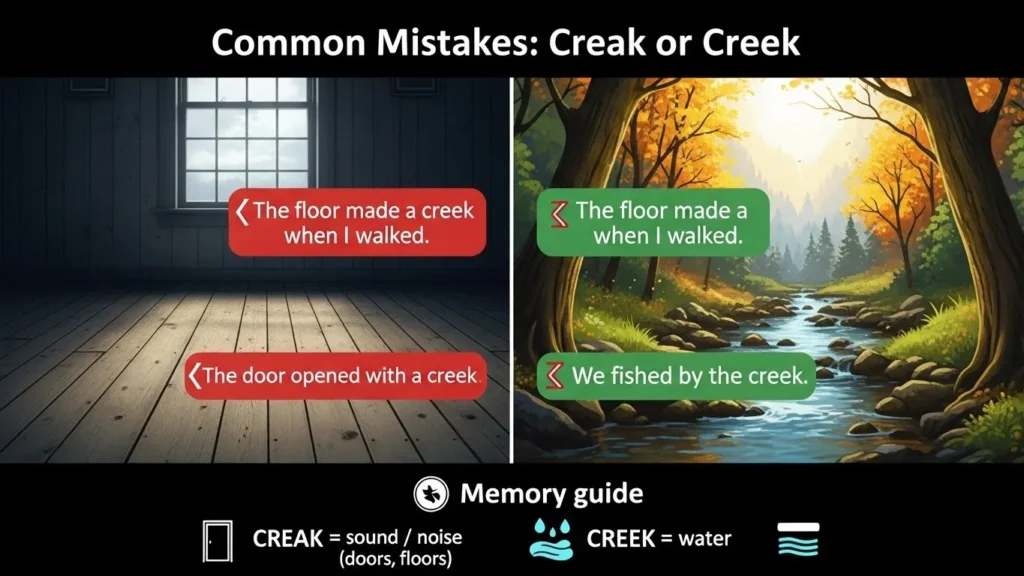
❌ The floor made a creek when I walked.
✅ The floor made a creak when I walked.
❌ We fished by the creak.
✅ We fished by the creek.
❌ Confusing homophones in writing
✅ Match the word to its context
One of the most common mistakes writers make with creak and creek is treating them as interchangeable simply because they sound the same.
Both are pronounced /kriːk/, people often choose the wrong spelling without thinking about the meaning.
A frequent error is using creek when describing sounds, such as writing “the floor made a creek”. This is incorrect because creek never refers to noise it only refers to water.
Another common mistake appears in storytelling and descriptive writing. Writers sometimes describe eerie house sounds using creek instead of creak, which weakens the imagery and confuses readers.
People writing about nature occasionally use creak when talking about rivers or streams, especially non-native English speakers who rely on pronunciation rather than meaning.
Spelling autocorrect is another cause of confusion. Many devices automatically replace creak with creek, especially if the user frequently writes about outdoor topics.
This can silently introduce errors into otherwise correct writing.
Some learners also assume one word is British and the other American, which is incorrect. Both creak and creek are used the same way in all English varieties.
The key to avoiding mistakes is simple: always ask whether you are describing a sound or water before choosing the word.
Creak or Creek in Everyday Examples
House/Objects
- The staircase will creak if you step on it.
- Wooden doors often creak at night.
Nature
- We paddled along the creek near the forest.
- The children played by the creek all afternoon.
Stories
- A creak in the hallway made me wake up.
- The treasure map led to a hidden creek.
Casual Conversation
- “Did you hear that creak?”
- “Let’s go explore the creek behind the house.”
Comparison Table: Creak vs Creek
| Feature | Creak | Creek |
| Part of speech | Verb / Noun | Noun |
| Meaning | Squeaking / groaning sound | Small stream or waterway |
| Common error | Using for water | Using for sound |
| Pronunciation | Same | Same |
| Usage | Houses, doors, floors | Nature, fishing, rivers |
FAQs: Creak or Creek
1. Are creak and creek pronounced the same?
Yes, they are homophones: /kriːk/.
2. Can creak refer to water?
No, creak is only for noises.
3. Can creek refer to sound?
No, creek is a small stream.
4. Do British and American English differ?
No, spelling and usage are the same.
5. Is creak informal or formal?
It can be used in both casual and literary contexts.
6. Can creek be used in urban areas?
Yes, it can refer to small streams, even in cities.
Conclusion
The difference between creak or creek is about sound vs water. Creak refers to squeaking or groaning noises, while creek refers to a small stream or waterway. Using the wrong word can confuse readers or listeners.
A simple tip: if it makes noise, use creak; if it’s water, use creek. Following this rule ensures your writing is clear, professional, and accurate.
The difference between creak or creek may seem small at first, but it plays an important role in clear and accurate communication.
The two words are pronounced the same, their meanings are completely different and tied to very specific contexts. Creak refers to a squeaking, groaning, or cracking sound, often made by doors, floors, stairs, or old furniture. Creek, on the other hand, refers to a small stream or natural waterway and has nothing to do with sound.
Because these words are homophones, confusion is common in everyday writing, storytelling, and even professional content.
Once you connect creak with noise and creek with water, the distinction becomes easy to remember. This simple mental check can instantly prevent errors and improve clarity.
Using the correct word not only avoids misunderstandings but also makes your writing look polished and confident.
In short, remember this rule: if it squeaks, it creaks; if it flows, it’s a creek. Following this guideline will ensure your English is accurate, professional, and easy to understand in any context.

I am Sidney Greenbaum, a linguist who studied how English is actually used, not just how it is taught. I analyzed sentence structure and word differences to make English clearer and more practical. My research helped learners understand real-world English comparisons.