

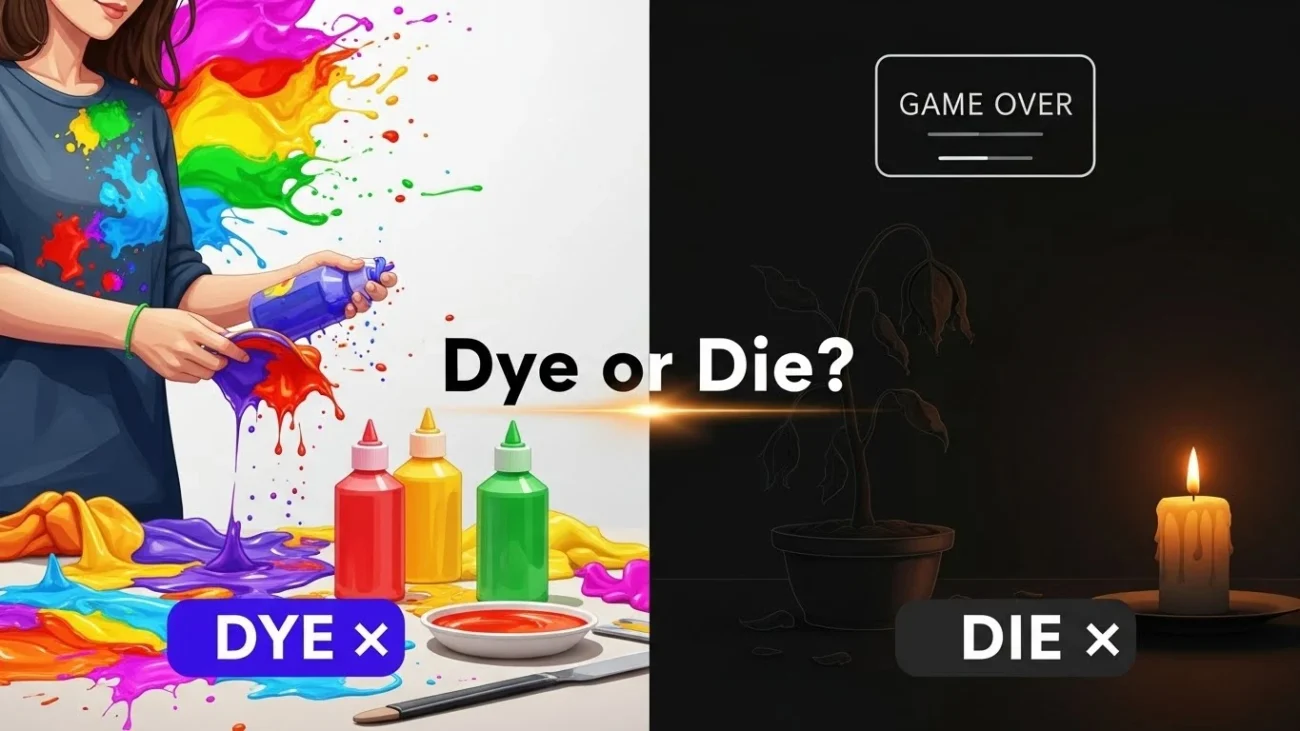
Many people search for dye or die because these two words look and sound very similar, yet their meanings are completely different.
A small spelling mistake can turn a normal sentence into something shocking or confusing. For example, “I want to die my hair” has a very different meaning than intended.
This confusion is common among English learners, students, and even native speakers when typing quickly.
If both words are short and pronounced the same, they are easy to mix up in writing, emails, and social media posts.
This article clears the confusion in a simple and clear way. You’ll get a quick answer first, then learn the origin of each word, common mistakes, everyday examples, and expert tips.
By the end, you’ll confidently know when to use dye and when die is the correct word.
Dye or Die : Quick Answer
- 🎨 Dye → to color something
- ⚰️ Die → to stop living
Examples:
- I want to dye my hair blue.
- Plants die without water.
👉 Color = dye
👉 Death = die
Read More : Filing vs Filling: Meaning, Examples, and which one is correct?
The Origin of Dye or Die
- Dye comes from Old English deag, meaning color or stain.
- Die comes from Old Norse deyja, meaning to perish or end life.
Although they sound the same, their origins and meanings are completely different.
British English vs American English Spelling
There is no spelling difference between British and American English.
| Word | British English | American English |
| Dye | Same | Same |
| Die | Same | Same |
👉 The difference is meaning, not region.
Which Spelling Should You Use?
Use dye when:
- Talking about hair, clothes, or fabric color
- Referring to coloring processes
Use die when:
- Talking about death or endings
- Referring to machines stopping or games ending
Memory tip:
- Dye has “ye” like yellow (a color)
Common Mistakes with Dye or Die
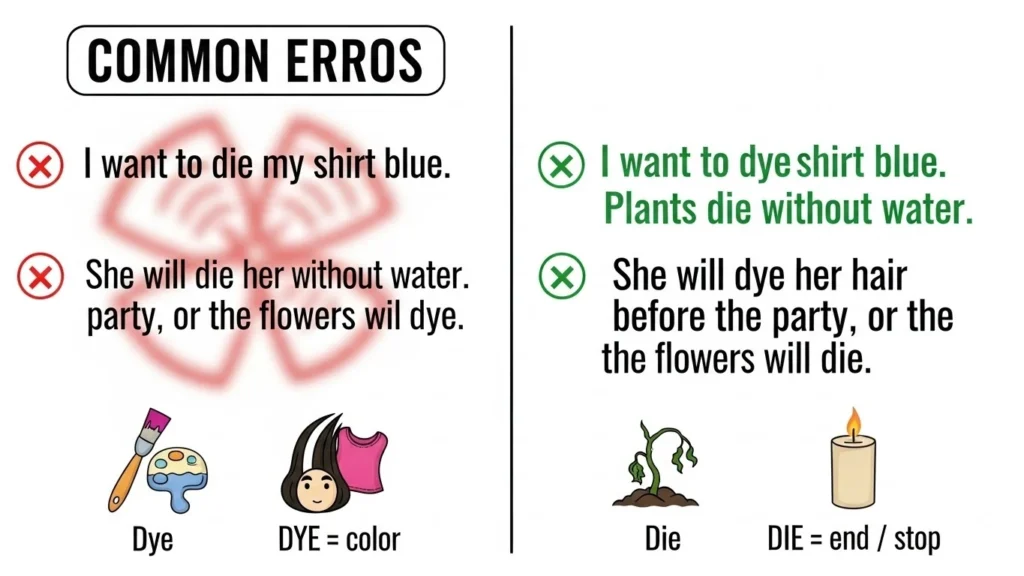
Many writers, students, and even native speakers frequently confuse dye and die, especially in fast typing or casual writing.
These mistakes can change the meaning drastically and sometimes create embarrassing sentences. Here are the most common errors and how to fix them:
- Using die instead of dye for coloring
❌ “I want to die my shirt blue.”
✅ “I want to dye my shirt blue.”
Tip: If the sentence is about coloring fabric, hair, or materials, always use dye. - Using dye instead of die for death or ending
❌ “Plants dye without water.”
✅ “Plants die without water.”
Tip: If the sentence is about life ending, machines stopping, or characters perishing, use die. - Mixing them in the same text
❌ “She will die her hair before the party, or the flowers will dye.”
✅ “She will dye her hair before the party, or the flowers will die.”
Tip: Always check the context: is it color or life/ending? Correct usage depends entirely on meaning. - Confusing homophones in spoken English
Many learners write die when they hear “dye” in instructions, or vice versa.
Tip: Visual memory works best: dye → color (extra letters, adds color), die → end/final (short and sharp). - Misusing in idioms or figurative speech
❌ “You should die your skills in cooking.”
✅ “You should dye the cloth with vibrant colors.”
Tip: Always match the word to the literal meaning; idioms using die usually relate to endings or failure.
By understanding these common pitfalls, learners can avoid embarrassing mistakes and write clearly, professionally, and confidently.
Dye or Die in Everyday Examples
Fashion
- She plans to dye her dress red.
Health
- Without treatment, the disease may cause death.
DIY
- Fabric dye works best on cotton.
Gaming
- Your character will die if health hits zero.
Dye or Die : Google Trends & Usage Data
- Die is searched more often due to general usage
- Dye searches rise during fashion trends
- Confusion is common due to identical pronunciation
👉 Context decides the correct word.
Comparison Table: Dye vs Die
| Feature | Dye | Die |
| Part of speech | Verb / Noun | Verb |
| Meaning | Color | Death |
| Pronunciation | Same | Same |
| Common error | Used instead of die | Used instead of dye |
| Interchangeable | ❌ No | ❌ No |
FAQs: Dye or Die
1. Are dye and die homophones?
Yes, they sound the same.
2. Which word is used for hair coloring?
Dye.
3. Can die ever mean color?
No.
4. Is dye a noun and a verb?
Yes.
5. Do British and American English differ here?
No.
6. Is “die my hair” correct?
No, it should be dye my hair.
Conclusion
The difference between dye or die is simple but very important. Dye relates to color and staining, while die relates to death or ending. Because they sound exactly the same, mixing them up is a common mistake.
Remember this easy rule: if it’s about color, use dye; if it’s about life ending, use die. Keeping this in mind will help you avoid confusion and write clearly and correctly every time.

I am Sidney Greenbaum, a linguist who studied how English is actually used, not just how it is taught. I analyzed sentence structure and word differences to make English clearer and more practical. My research helped learners understand real-world English comparisons.