Many people search for either or eather because these words sound similar in fast speech, but only one of them is correct in standard English.
This confusion is very common among English learners, students, and even content writers. A single spelling mistake can make your sentence look unprofessional, especially in exams, emails, blogs, or formal writing.
I’ve noticed that people often write eather because they pronounce either differently—sometimes as ee-ther and sometimes as eye-ther.
This pronunciation difference creates spelling doubt. The good news is simple: only one spelling is correct, and the other is a spelling error.
This article gives you a quick answer, explains the origin, clears pronunciation confusion, shows correct usage with examples, highlights common mistakes, and offers professional advice.
By the end, you’ll confidently know which word to use and why people get confused.
Either or Eather : Quick Answer
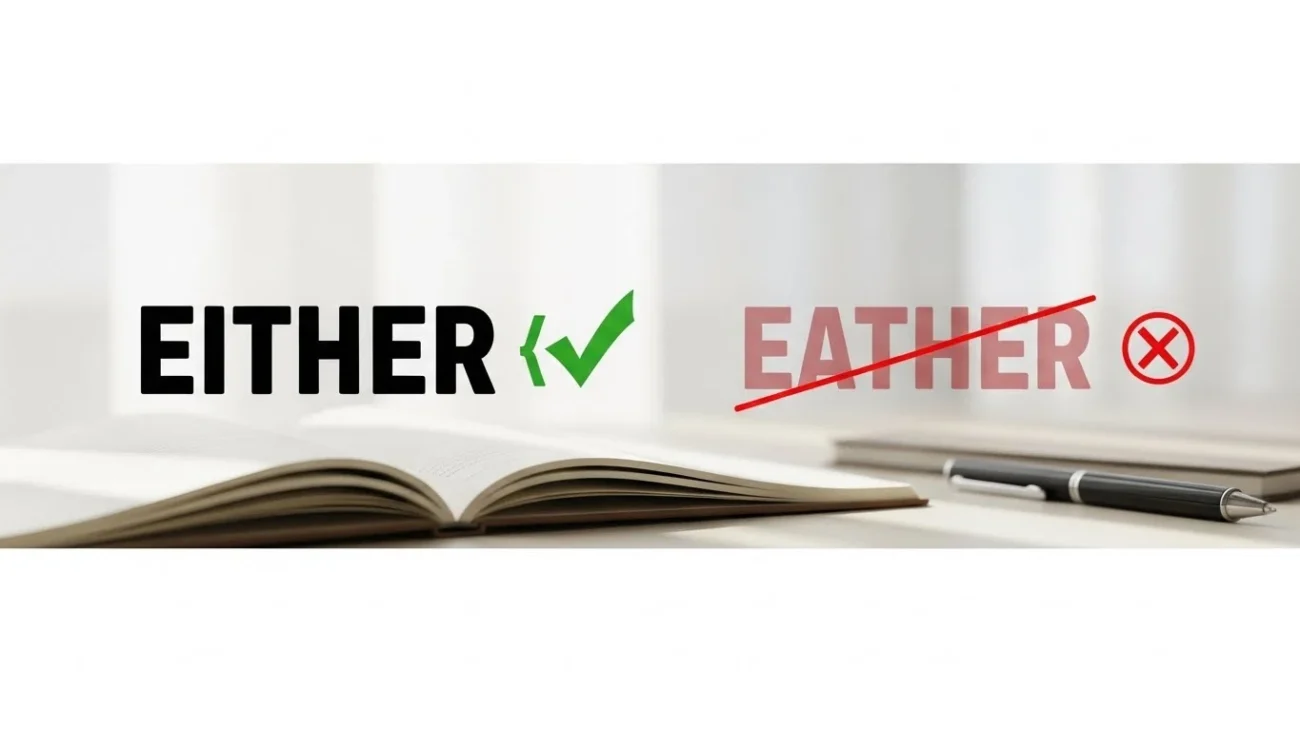
✅ Either is the correct word.
❌ Eather is incorrect and not a real English word.
Examples:
- You can choose either option.
- I don’t like either movie.
👉 If you see eather, it is always a spelling mistake.
Discover More Article:Here or Hear:Difference and Which One Should You Use?
The Origin of Either or Eather
Either comes from Old English ǣgther, meaning each of two. Over time, its spelling changed, but its meaning stayed the same: a choice between two things.
Eather has no origin in English dictionaries. It exists only because of:
- Pronunciation confusion
- Spelling by sound
- Influence of accents
English pronunciation does not always match spelling, and either is a perfect example of that.
British English vs American English Spelling
There is no spelling difference between British and American English.
| Aspect | British English | American English |
| Correct spelling | Either | Either |
| Incorrect spelling | Eather ❌ | Eather ❌ |
| Pronunciation | ee-ther / eye-ther | ee-ther / eye-ther |
👉 Pronunciation may vary, but spelling does not.
Which Spelling Should You Use?
Always use either, no matter your audience.
- US audience → Either
- UK/Commonwealth → Either
- Global writing → Either
There is no situation where eather is acceptable in standard English.
Common Mistakes with Either or Eather
❌ You can eather stay or leave.
✅ You can either stay or leave.
❌ I don’t like eather answer.
✅ I don’t like either answer.
❌ Eather way is fine.
✅ Either way is fine.
Memory trick:
- Either contains i, just like choice and option.
Why “Eather” Is a Common Spelling Error and How to Avoid It
The spelling eather is one of those mistakes that looks correct at first glance, especially to English learners. This happens because English pronunciation does not always follow clear spelling rules. Since either can be pronounced in two ways ee-ther and eye-ther many people assume the spelling should change as well. However, English spelling does not work that way.
Another reason this mistake is so common is phonetic writing. Learners often write words exactly how they sound in their accent. In fast speech, either may sound like eather, especially in South Asian and ESL environments. Unfortunately, spellcheck tools sometimes fail to highlight this mistake because users assume the spelling is correct and never question it.
This error becomes more noticeable in exams, academic writing, and professional emails. Writing eather option instead of either option can reduce marks or make content look careless. In SEO writing and blogging, such spelling errors can also hurt credibility and user trust. Readers may leave a page quickly if they see basic mistakes.
The best way to avoid this error is simple: remember that either is the only correct spelling, regardless of pronunciation. If you ever hesitate, replace the word with one of two. If the sentence still makes sense, either is correct. Practicing this habit will help eliminate the mistake permanently and improve overall writing accuracy.
Either or Eather in Everyday Examples
Emails
- You may contact either department.
- Either option works for me.
News
- The bill could pass either today or tomorrow.
Social Media
- Either vibe is perfect today.
Formal Writing
- The candidate must meet either requirement.
Either or Eather : Google Trends & Usage Data
Search behavior shows:
- Either is extremely common worldwide
- Eather appears only in spelling-related searches
- High confusion in South Asia and ESL regions
Most users search this keyword to confirm the correct spelling, not meaning.
Comparison Table: Either vs Eather
| Feature | Either | Eather |
| Correct English word | ✅ Yes | ❌ No |
| Meaning | One of two | None |
| Dictionary entry | Yes | No |
| Used in exams | Yes | No |
| Professional writing | Yes | Never |
FAQs: Either or Eather
1. Is “eather” a real word?
No, it is always incorrect.
2. Why do people write eather?
Because of pronunciation confusion.
3. How do you pronounce either?
Both ee-ther and eye-ther are correct.
4. Is either used in British and American English?
Yes, in both.
5. Can either mean both?
No, it refers to one of two.
6. Is either formal or informal?
It works in both contexts.
7. Can I use either in negative sentences?
Yes, e.g., I don’t like either option.
Conclusion
The debate between either or eather has a very clear answer. Either is the only correct spelling, while eather is simply a common mistake caused by pronunciation. There is no regional variation, no alternative spelling, and no exception to this rule.
Whether you are writing an email, answering an exam question, creating SEO content, or posting on social media, always use either. Pronunciation may change based on accent, but spelling never does.
Learning and fixing small spelling errors like this can greatly improve your confidence and professionalism in English.Once you remember this rule, you’ll never make this mistake again.

I am Mark Twain, a writer who loved the English language for its humor, irony, and everyday comparisons. I used simple words to show deep differences between truth and lies, wisdom and foolishness. My writing proves that clear English is always more powerful than complicated English.