
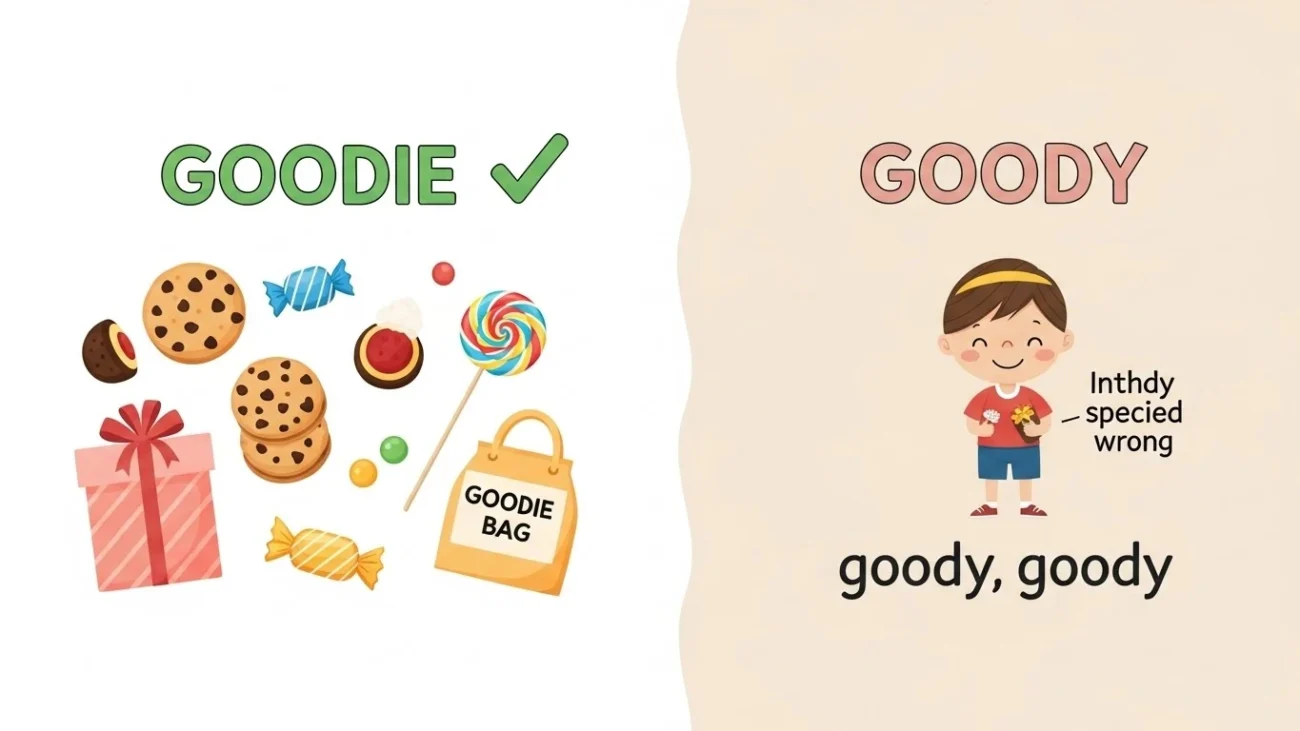
If you’re talking about snacks, gifts, or rewards, use goodie. If you mean a well-behaved person or a playful reaction, use goody.
Many readers ask “is it goody or goodie?” because the goodie or goody spelling difference is small but meaningful. Even searches like goody oder goodie show how widespread the confusion is.
The confusion is common in casual writing, children’s books, social media captions, and informal conversations. A small spelling change can affect tone, meaning, and correctness.
I’ve often seen people write goody bag when they mean goodie bag, or call a treat a goody when goodie sounds more natural. The truth is, both words exist, but they are not always interchangeable.
This article clears that confusion in a simple and practical way. You’ll get a quick answer first, then learn word origins, British vs American usage, common mistakes, everyday examples, and expert advice.
By the end, you’ll confidently know when to use goody and when goodie is the better choice.
Goody or Goodie : Quick Answer
Goodie means a treat, gift, or reward.
Goody usually refers to a person who behaves very well or is used informally to express pleasure.
Examples:
- The kids received some goodies.
- She’s such a goody-goody student.
👉 Treats or gifts → Goodie
👉 Well-behaved person or expression → Goody
To define goodie, it simply means a treat, reward, or something pleasant. If you’re wondering what’s goodie meaning, think of snacks, gifts, or small surprises.
Discover More Article:Confused Between Rogue and Rouge? Here’s the Clear Answer
The Origin of Goodie or Goody
Both words come from good, but their paths are different.
Goody comes from Middle English gode, and was once used as a title of respect (like Goodwife). Over time, it became associated with moral behavior and politeness.
Goodie developed later as an informal noun meaning something good or pleasant, especially food or small rewards.
The confusion exists because:
- Both come from good
- Both are informal
- Both sound nearly identical
But their meanings evolved in different directions.
British English vs American English Spelling
There is no major spelling difference, but usage preference exists.
| Aspect | British English | American English |
| Goody | Less common | Less common |
| Goodie | Very common | Very common |
| Preferred for treats | Goodie | Goodie |
👉 Goodie is more widely accepted in both varieties.
Which Spelling Should You Use?
Choose based on meaning and tone.
- US audience → Goodie for treats
- UK/Commonwealth → Goodie for treats
- Children’s context → Both, but goodie sounds friendlier
- Describing behavior → Goody
Professional tip:
If you mean a gift or snack, goodie is almost always the right choice.
Common Mistakes with Goody or Goodie
People often wonder whether to say oh goody or goodie. The correct and natural expression is “Oh goody!”, which shows excitement or happiness.
The phrase goody-goody is also common. The goodie goodie meaning does not relate to treats here; instead, goody-goody describes someone who behaves overly well or tries too hard to please.
❌ The party had many goody bags.
✅ The party had many goodie bags.
❌ She gave the kids some goody.
✅ She gave the kids some goodies.
❌ He is a goodie-goodie boy.
✅ He is a goody-goody boy.
Memory trick:
- Goodie → gifts & snacks
- Goody → behavior or expression
Many people specifically ask is it goody or goodie bag or search goody or goodie bag online. The correct and widely accepted phrase is goodie bag.
If you’re unsure is it goodie or goody bag, remember that treats and gifts always use goodie, not goody.
Confusion between goody or goodie is common in casual writing, kids content, and social media. Goodie is the preferred word for treats, gifts, and rewards, while goody is limited to expressions or behavior descriptions. Using the correct term improves tone, clarity, and natural English usage.
Writers, teachers, and content creators often prefer goodie meaning because it sounds warmer and more natural in modern English. It fits perfectly in phrases like goodie bag and holiday goodies. Goody now survives mainly in fixed expressions or playful speech. Choosing carefully helps avoid awkward phrasing and keeps your writing friendly and up to date.
Goody or Goodie in Everyday Examples
In texting and social media, goodie meaning in chat usually refers to a treat, gift, or something exciting. For example, people say, “I brought you a little goodie” or “Here’s a surprise goodie for you.”
In casual online conversations, goodie sounds warmer and more natural than goody.
Social Media
- Weekend snacks are the best goodies 🍪
School
- Students received goodie bags.
Casual Speech
- Oh goody, you’re here!
Writing
- She was known as a goody-goody child.
Goodie vs Goody : Google Trends & Usage Data
Search trends show:
- Goodie is far more popular worldwide
- Goody appears mainly in fixed phrases
- High confusion in informal writing and ESL learning
Top regions searching this keyword:
- United States
- United Kingdom
- India
- Pakistan
👉 Most users search to confirm correct informal usage.
The phrase goodie-goodie meaning refers to someone who behaves overly well or follows rules too strictly.
Comparison Table: Goody vs Goodie
| Feature | Goody | Goodie |
| Meaning | Well-behaved person / expression | Treat or gift |
| Tone | Descriptive / playful | Friendly / casual |
| Common usage | Low | High |
| Plural form | Rare | Goodies |
| Safe choice | Limited | Yes |
FAQs: Goody or Goodie
1. Are goody and goodie both correct words?
Yes, but they have different uses.
2. Which word means a treat?
Goodie.
3. What does goody-goody mean?
A person who behaves overly well.
4. Is goody old-fashioned?
Yes, in many contexts.
5. Is goodie informal English?
Yes, but widely accepted.
6. Can I say “goody bag”?
It’s better to say goodie bag.
7.Goodie or goody spelling — which is correct?
Both words exist, but goodie is correct for treats, while goody is used for behavior or expressions.
8. What is godie meaning?
“Godie” is a misspelling. The correct word is goodie.
Conclusion
The difference between goody or goodie is small but meaningful. Goodie is the modern, friendly word used for treats, gifts, and rewards. Goody, on the other hand, is more limited and usually refers to behavior or appears in fixed expressions like goody goody.
There is no British or American spelling conflict here only correct usage based on meaning. If you’re talking about snacks, gifts, or rewards, goodie is the clear winner. Use goody only when describing behavior or expressing delight.
Understanding these subtle differences helps your English sound more natural, accurate, and confident.

I am Michael Swan, an English grammarian known for explaining confusing grammar and word comparisons in a clear way. I focused on real usage, not just rules, helping learners understand why English works the way it does. My work simplifies complex language problems for everyday users.