

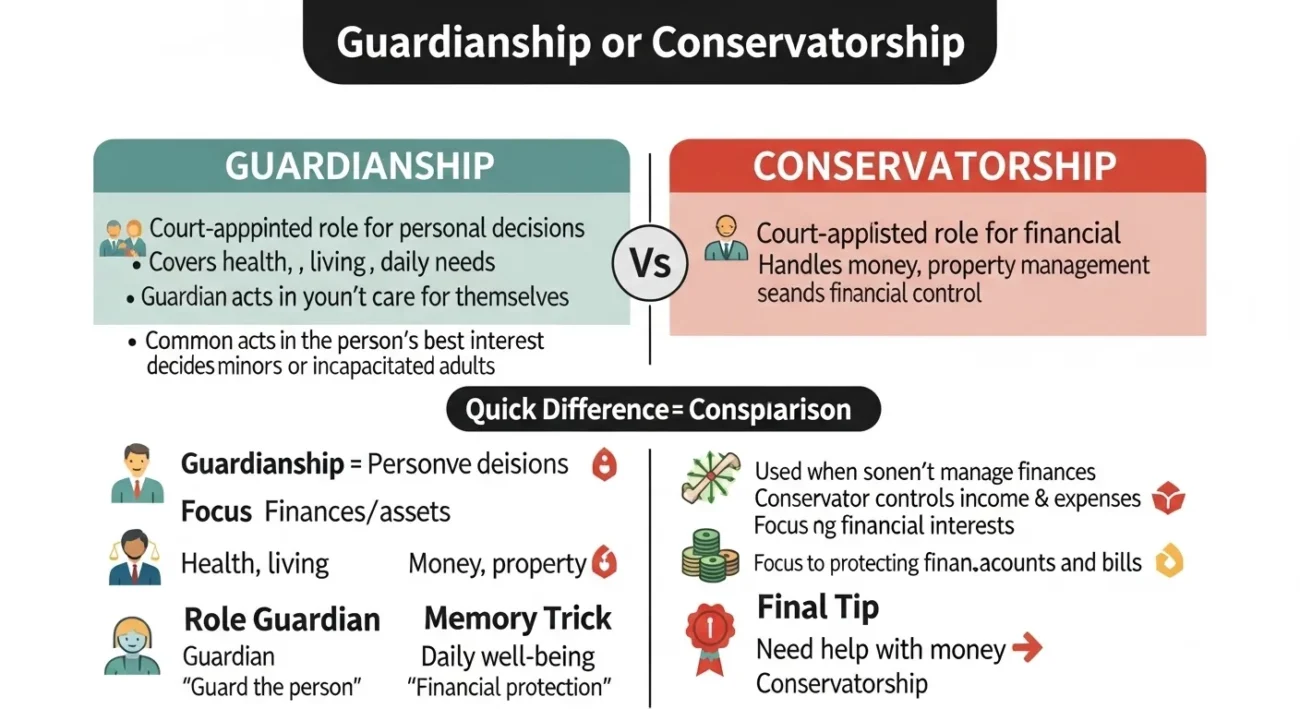
If you are confused between “guardianship or conservatorship,” the key difference is that guardianship covers personal care decisions, while conservatorship covers financial and property management.
I remember mixing these terms because both involve legal responsibility for someone else. But when I looked deeper, I realized they apply to different areas of a person’s life.
Many people search “guardianship or conservatorship” when dealing with minors, older people parents, or adults with disabilities.
In this guide, I will explain meanings, roles, examples, legal scope, and key differences so you can clearly understand and use guardianship or conservatorship correctly.
Guardianship or Conservatorship : Quick Answer
The difference between guardianship or conservatorship is simple:
- Guardianship: control over personal care decisions ✅
- Conservatorship: control over financial matters ✅
Examples
- A guardian decides medical care
- A conservator manages money and property
Simple idea
- Guardianship = care 👤
- Conservatorship = money 💰
The Meaning of Guardianship or Conservatorship
Guardianship in Guardianship or Conservatorship
Guardianship is a legal arrangement where a person (guardian) is responsible for someone’s personal and daily life decisions.
This includes:
- Healthcare decisions
- Living arrangements
- Education (for minors)
- Daily care needs
👉 Examples:
- A parent becomes guardian of a child
- A guardian decides medical treatment
Conservatorship in Guardianship or Conservatorship
Conservatorship is a legal arrangement where a person (conservator) manages someone’s financial affairs and property.
This includes:
- Managing bank accounts
- Paying bills
- Handling investments
- Protecting assets
👉 Examples:
- A conservator manages an older people person’s finances
- The court appoints someone to handle property
Key Differences Between Guardianship or Conservatorship
1. Type of Responsibility in Guardianship or Conservatorship
- Guardianship focuses on personal care
- Conservatorship focuses on financial matters
👉 Example:
- Guardian decides healthcare
- Conservator manages money
2. Scope in Guardianship or Conservatorship
- Guardianship covers daily life decisions
- Conservatorship covers assets and finances
👉 Example:
- Living arrangements vs property management
3. Who Needs It in Guardianship or Conservatorship
- Guardianship → minors or individuals needing personal care
- Conservatorship → adults needing financial management
4. Legal Control in Guardianship or Conservatorship
- Guardians have authority over personal decisions
- Conservators have authority over financial decisions
Comparison Table for Guardianship vs Conservatorship
| Feature | Guardianship | Conservatorship |
| Focus | Personal care | Financial matters |
| Role | Guardian | Conservator |
| Decisions | Health, living | Money, property |
| Common Use | Children, disabled | incapacitated |
| Purpose | Care | Asset management |
Which One Should You Use for Guardianship or Conservatorship?
Use Guardianship in Guardianship or Conservatorship if:
- You need control over personal care decisions
- The person needs help in daily life
- It involves health, education, or living
Use Conservatorship in Guardianship or Conservatorship if:
- You need control over financial matters
- The person cannot manage money
- It involves assets, bills, or property
Common Mistakes with Guardianship or Conservatorship
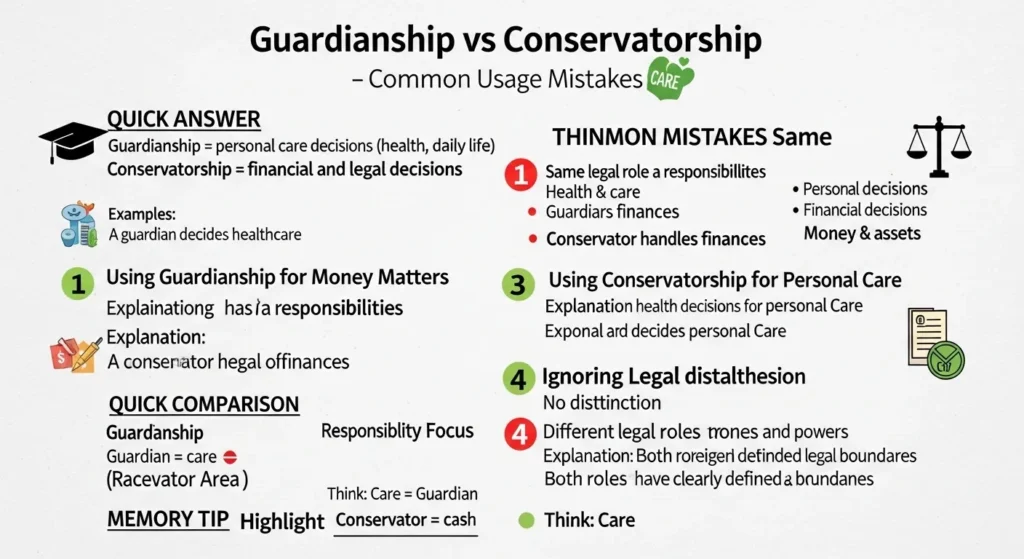
Mistake 1: Thinking both are the same
❌ Same legal role
✅ Different responsibilities
Mistake 2: Using guardianship for money matters
❌ Guardian manages finances
✅ Conservator handles finances
3) Mistake: Using conservatorship for personal care
❌ Conservator decides healthcare
✅ Guardian decides personal care
Mistake 4: Ignoring legal differences
❌ No distinction
✅ Different legal roles and powers
Guardianship and Conservatorship in Real Life Situations
Family Situation
- A child needs a guardian for care
- An parent needs a conservator for finances
Medical Situation
- Guardian decides treatment
- Conservator pays medical bills
Legal Situation
- Courts appoint guardians for minors
- Courts appoint conservators for financial protection
Guardianship or Conservatorship : Memory Trick
🧠 Guardian → Guard person 👤
🧠 Conservator → Conserve money 💰
Conservatorship or Guardianship : Real Life Understanding
In real life, both roles can sometimes exist together. For example, one person may act as both guardian and conservator if someone needs help with both personal care and finances.
When I understood this, it became clear that the difference is not about who is responsible, but what they are responsible for.
Guardianship or Conservatorship : Final Insight
The confusion between guardianship or conservatorship happens because both involve legal responsibility for another person. However, the key difference is their focus:
- Guardianship = personal life
- Conservatorship = financial life
This simple idea makes everything clear.
Conclusion
When I compare guardianship or conservatorship, I clearly understand that both are important legal roles but serve different purposes. Guardianship is focused on personal care, including health, living arrangements, and daily needs. It ensures that a person is safe and properly cared for.
On the other hand, conservatorship is focused on financial matters, including managing money, paying bills, and protecting assets. It ensures that a person’s financial life is handled responsibly.
The confusion usually comes because both roles involve responsibility for another person. However, once you understand the difference between personal care and financial control, it becomes easy to choose the right term.
In simple words, guardianship is about caring for a person, while conservatorship is about managing their money. Once you remember this, you will never confuse these terms again.

I am Michael Swan, an English grammarian known for explaining confusing grammar and word comparisons in a clear way. I focused on real usage, not just rules, helping learners understand why English works the way it does. My work simplifies complex language problems for everyday users.