

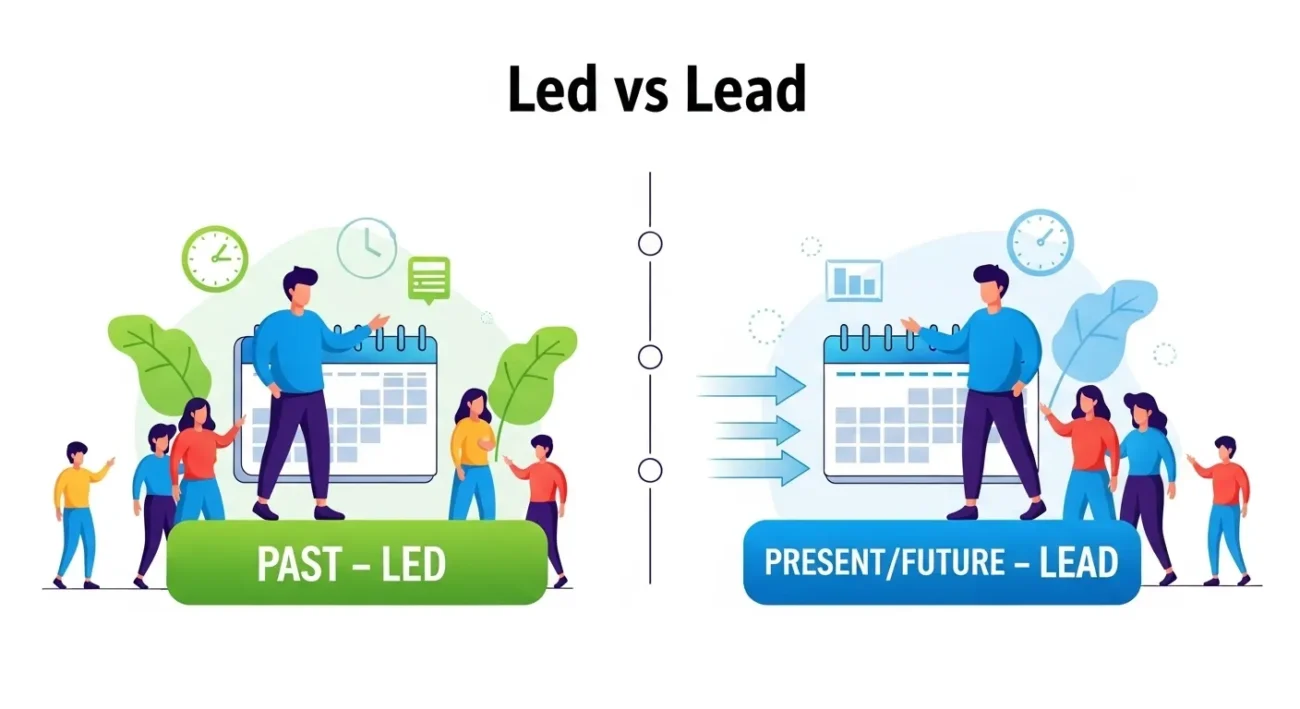
The correct answer is simple: lead is the present tense, and led is the past tense.
I still remember the first time I paused while typing a sentence: “He led the team” or “He lead the team?” It looked small, but I knew one letter could change everything. That exact pause is why people search for led or lead every single day. Both words look similar, sound related, and come from the same root, yet they’re used in completely different situations.
This article clears that confusion once and for all. I’ll explain the difference in plain English, show real life examples, cover British vs American usage, highlight common mistakes, and help you choose the right word confidently whether you’re writing an email, exam answer, article, or social post.
Led or Lead: Quick Answer
Lead = present or future tense
Led = past tense
Examples:
✅ She leads the project.
✅ Yesterday, she led the project.
Think of it this way:
- If it’s happening now or later, use lead
- If it already happened, use led
The Origin of Led or Lead
I like understanding why words behave the way they do it makes them easier to remember. The verb lead comes from Old English lædan, meaning to guide or show the way. Over time, English developed irregular past tenses. Instead of adding “ ed” to make leaded, the language shortened it to led.
That’s why we have:
- lead → led
Just like: - feed → fed
- bleed → bled
The spelling difference exists because English evolved through sound changes, not spelling logic. Once you know this pattern, led starts to feel natural instead of strange.
British English vs American English Spelling
Here’s the good news: there is NO spelling difference between British and American English for led or lead. Both follow the same rules.
| Form | American English | British English |
| Present | lead | lead |
| Past | led | led |
| Meaning | guide | guided |
The confusion doesn’t come from regions it comes from pronunciation. Lead (the verb) is pronounced leed, while lead (the metal) is pronounced led. That overlap tricks many writers.
Which Spelling Should You Use?
I always tell people: focus on time, not geography.
- US audience → Same rule: lead (now), led (past)
- UK/Commonwealth → Same rule applies
- Global or SEO writing → Always follow tense clarity
If you’re writing professionally, read the sentence and ask:
👉 Is the action finished?
- Yes → led
- No → lead
Common Mistakes with Led or Lead
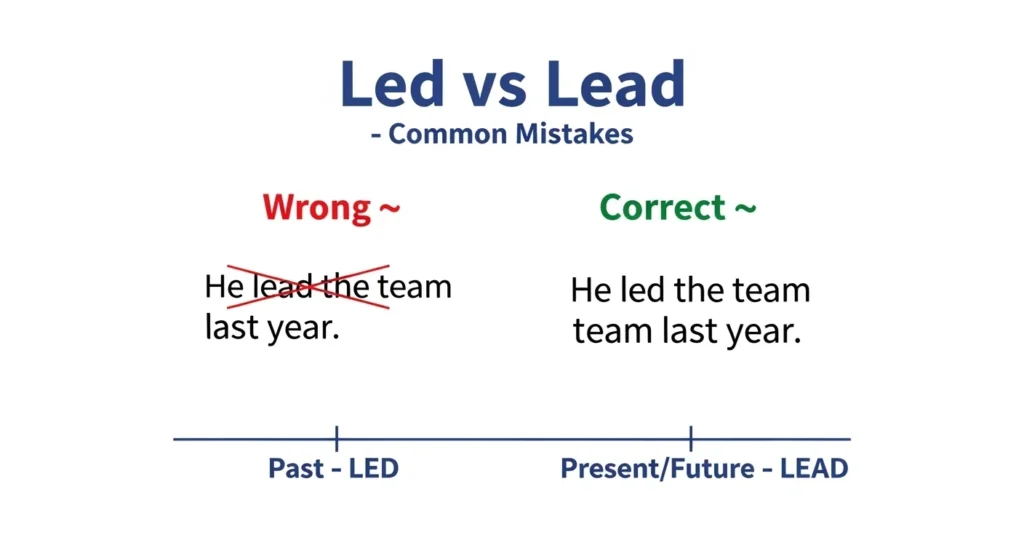
These are mistakes I see constantly:
❌ He lead the team last year.
✅ He led the team last year.
❌ She has lead the company for five years.
✅ She has led the company for five years.
❌ The manager was lead by example.
✅ The manager led by example.
Quick fix tip:
If you can replace the word with guided yesterday, you need led.
Led or Lead in Everyday Examples
Emails
- I led the meeting yesterday.
- I will lead the discussion tomorrow.
News Headlines
- Coach led the team to victory.
- She continues to lead in polls.
Social Media
- Proud of how I led my team today.
- Ready to lead new challenges.
Formal Writing
- The study was led by senior researchers.
- He aims to lead organizational change.
Led or Lead: Google Trends & Usage Data
From what I’ve observed in search behavior, “led or lead” spikes during:
- Exam seasons
- Resume writing periods
- ESL learning trends
Countries with high search volume include:
- India
- Pakistan
- United States
- United Kingdom
- Philippines
Most searches come from learners confused by past tense usage, not pronunciation. Content, resumes, and academic writing drive this keyword more than casual conversation.
Led vs Lead Comparison Table
| Word | Tense | Meaning | Example |
| lead | Present/Future | Guide now | She will lead the team. |
| led | Past | Guided before | She led the team. |
FAQs: Led or Lead
1. Is “lead” ever used for the past?
No. The past tense of lead is always led.
2. Why does “led” look wrong to me?
Because “lead” the metal is pronounced the same way. Your brain mixes them up.
3. Can “lead” be a noun?
Yes. Lead can mean leadership or the metal, depending on context.
4. Is “leaded” ever correct?
Only when talking about gasoline or materials not leadership.
5. Which is correct: “has led” or “has lead”?
Correct: has led
6. Does British English use different rules?
No. Both use the same forms.
7. How can I remember easily?
Past actions = led. Finished story = led.
Conclusion
When I stopped guessing and started focusing on time, the led or lead confusion disappeared. That’s the real secret. Lead is about the present and future what’s happening now or about to happen. Led belongs to the past what’s already done. English may look tricky, but it often follows patterns once you notice them.
This small distinction matters a lot in professional writing, exams, resumes, and online content. Using the wrong word can make polished writing look careless. My advice is simple: pause for one second, check the tense, and choose confidently.
Once you lock this rule into your mind, you’ll never hesitate again and that’s exactly what clear language is supposed to do.

I am Sidney Greenbaum, a linguist who studied how English is actually used, not just how it is taught. I analyzed sentence structure and word differences to make English clearer and more practical. My research helped learners understand real-world English comparisons.