I remember stopping mid-sentence once, unsure whether to write liqueur or liquor. That small pause explains why so many people search for this keyword.
Both words look similar, sound related, and often appear in drink menus, recipes, and articles. Yet they mean different things.
Using the wrong one can confuse readers or make writing look unprofessional. This article solves that confusion clearly and quickly.
I explain the difference, where each word comes from, how British and American English treat them, and which one you should use based on your audience.
By the end, you’ll know exactly when to use liqueur and when liquor without hesitation.
Liqueur or Liquor: Quick Answer
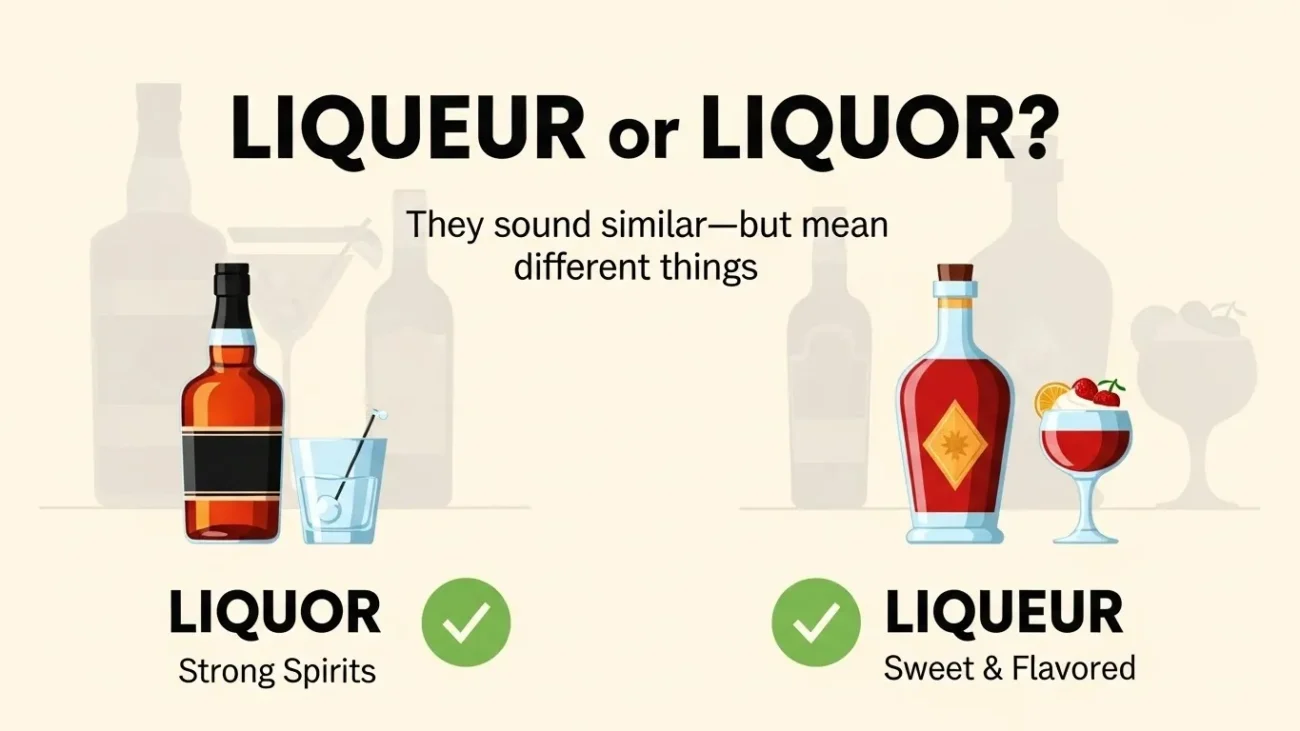
Liquor is a general term for distilled alcoholic drinks like vodka, whiskey, rum, or gin.
Liqueur is a specific type of alcohol that is sweetened and flavored, often with fruits, herbs, or spices.
Examples:
- Vodka is a liquor.
- Baileys is a liqueur.
- Tequila is a liquor.
- Amaretto is a liqueur.
In short: all liqueurs are liquor, but not all liquor is liqueur.
The Origin of Liqueur or Liquor
Both words come from the Latin word liquere, meaning “to be liquid.” Over time, their meanings separated.
Liquor entered English earlier and referred to any liquid, including water and broth. Later, it became linked mainly to strong alcoholic drinks.
Liqueur came from French. It was used for sweet, flavored alcoholic drinks made by monks and herbalists for medicine and pleasure. Because French spelling stayed intact, liqueur kept its extra letters and distinct meaning.
The spelling difference exists because English borrowed the words from different languages and times, then assigned them different roles.
British English vs American English Spelling
This is not a British vs American spelling issue. Both varieties use liquor and liqueur the same way.
The confusion happens because the words look alike, not because of regional spelling rules.
Examples:
- US: “The store sells liquor and cream-based liqueurs.”
- UK: “He prefers herbal liqueur over strong liquor.”
Comparison Table
| Feature | Liquor | Liqueur |
| Meaning | Distilled alcohol | Sweetened, flavored alcohol |
| Sugar added | No | Yes |
| Alcohol strength | Usually higher | Usually lower |
| Used in UK | Yes | Yes |
| Used in US | Yes | Yes |
Which Spelling Should You Use?
Use liquor if you mean:
- Spirits in general
- Alcohol sold in stores
- Strong distilled drinks
Use liqueur if you mean:
- Sweet or flavored drinks
- After-dinner drinks
- Cocktail ingredients like triple sec
Audience advice:
- US audience: Follow the same rule. Liquor for spirits, liqueur for flavored drinks.
- UK/Commonwealth: Same usage applies.
- Global audience: Use the correct term to avoid confusion, especially in food or drink content.
Choosing the right word shows clarity and professionalism.
Common Mistakes with Liqueur or Liquor
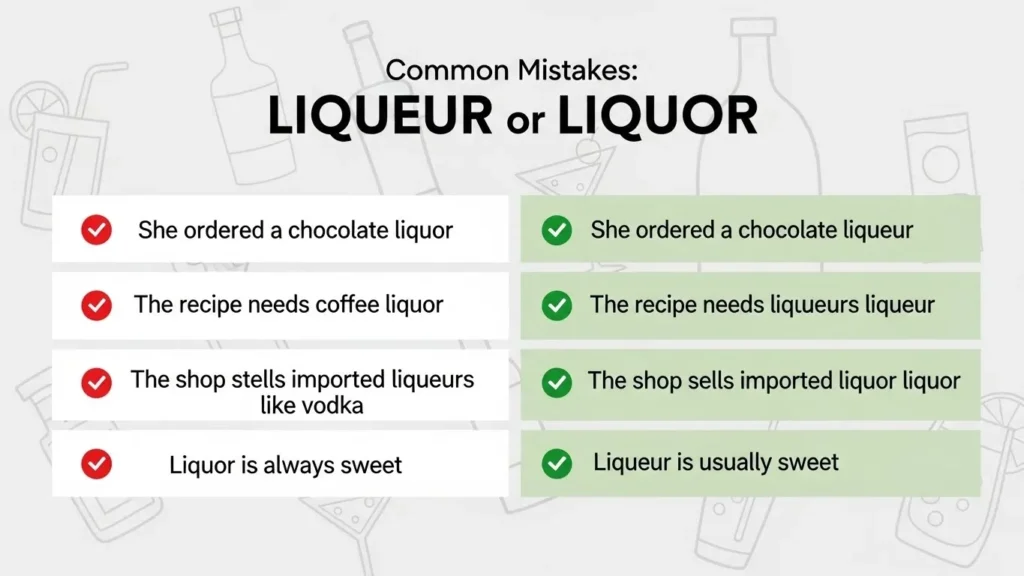
❌ She ordered a chocolate liquor.
✅ She ordered a chocolate liqueur.
❌ The recipe needs coffee liquor.
✅ The recipe needs coffee liqueur.
❌ The shop sells imported liqueurs like vodka.
✅ The shop sells imported liquor like vodka.
❌ Liquor is always sweet.
✅ Liqueur is usually sweet.
Most mistakes happen when people assume both words mean the same thing.
Learn More : Eminent vs Imminent: Meaning, Examples, and Common Mistakes
Liqueur or Liquor in Everyday Examples
Emails:
- “Please stock more imported liquor brands.”
- “The dessert uses orange liqueur.”
News:
- “The government increased taxes on liquor sales.”
- “Local producers launched a herbal liqueur.”
Social Media:
- “Cocktail night needs a good coffee liqueur!”
- “This store has the best liquor prices.”
Formal Writing:
- “The study examines consumer demand for distilled liquor.”
- “Traditional liqueur production remains popular in Europe.”
Liqueur or Liquor: Google Trends & Usage Data
Search data shows that liquor is more commonly searched worldwide. It appears often in legal, commercial, and health contexts.
Liqueur has fewer searches but spikes during:
- Holiday seasons
- Cocktail trends
- Recipe searches
By country:
- United States: “Liquor store” dominates searches
- UK & Europe: “Herbal liqueur” and “cream liqueur” trend more
- Global: Liquor = general alcohol, liqueur = specialty drinks
Context matters. Google users usually search liquor for buying or laws, and liqueur for taste or recipes.
Comparison Table: Liqueur vs Liquor
| Aspect | Liquor | Liqueur |
| Definition | Distilled alcoholic spirit | Sweet, flavored alcoholic drink |
| Examples | Vodka, rum, gin | Baileys, Cointreau, Amaretto |
| Taste | Strong, not sweet | Sweet, smooth |
| Use | Drinking, mixing | Cocktails, desserts |
| Common error | Confused with liqueur | Used instead of liquor |
FAQs
1. Are liqueur and liquor the same?
No. Liquor is general alcohol. Liqueur is sweet and flavored.
2. Is whiskey a liqueur or liquor?
Whiskey is a liquor.
3. Is Baileys a liquor?
It is a liqueur, not plain liquor.
4. Which word is correct for cocktails?
Both. Cocktails use liquor and sometimes liqueur.
5. Can liquor be sweet?
Usually no. Sweetness defines liqueur.
6. Is this a spelling difference between UK and US?
No. The meanings are the same worldwide.
7. Which word should I use in formal writing?
Use liquor for general alcohol, liqueur for flavored types.
Conclusion
Understanding the difference between liqueur or liquor removes a common and lasting confusion. While the words look similar and share the same root, their meanings are clearly separate today.
Liquor refers to distilled spirits in general, such as vodka, whiskey, or rum. Liqueur refers to a specific type of alcohol that is sweetened and flavored, often used in cocktails or desserts.
This is not a British or American spelling issue it is a meaning issue. Using the wrong word can confuse readers, customers, or clients, especially in professional, culinary, or commercial writing.
When in doubt, ask yourself a simple question: is it sweet and flavored? If yes, choose liqueur. If it is a strong spirit, choose liquor. Clear word choice builds trust, improves readability, and shows language confidence.

I am Mark Twain, a writer who loved the English language for its humor, irony, and everyday comparisons. I used simple words to show deep differences between truth and lies, wisdom and foolishness. My writing proves that clear English is always more powerful than complicated English.