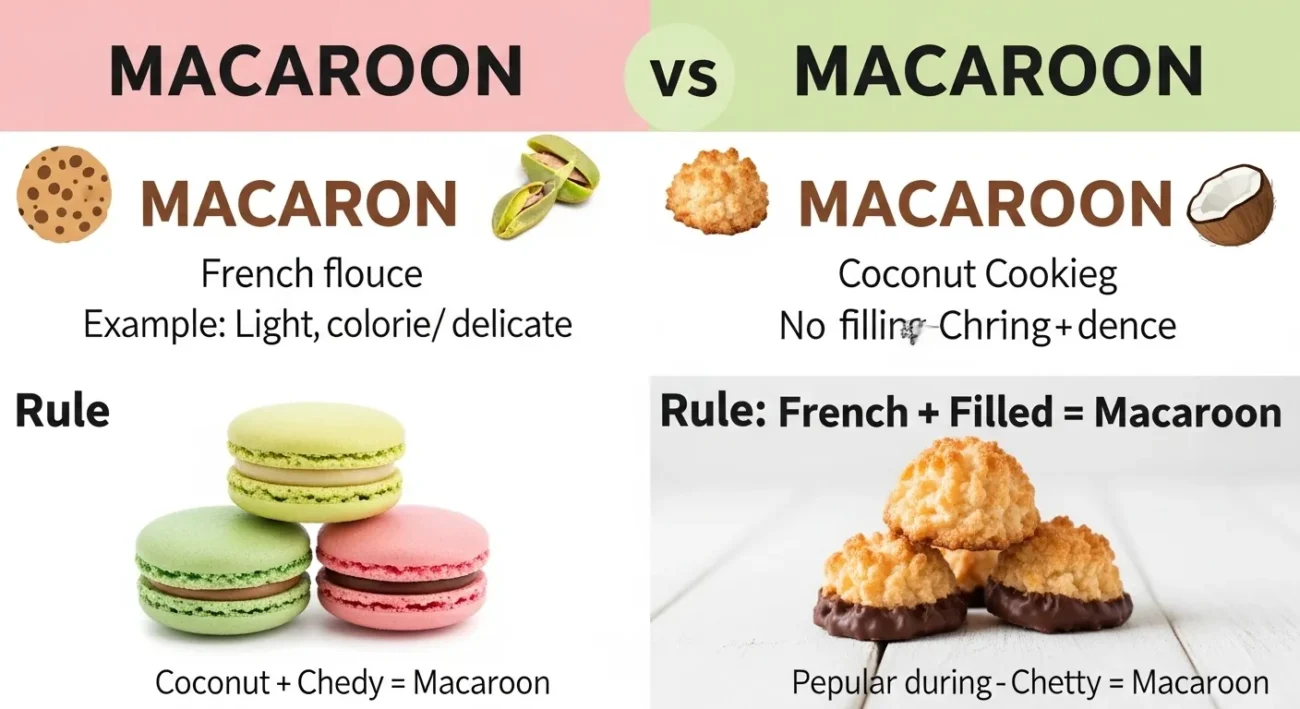
Macaroon or macaron? The quick answer: they are two different desserts.
I once ordered a box of colorful French cookies, thinking they were macaroons. When I got home, I realized they were macarons. That small spelling change means a big difference in taste and texture.
Many people search “macaroon or macaron” because the words look almost the same. Bakeries, cafés, and social media posts often mix them up.
In this guide, I will explain the difference, the origin, usage rules, common mistakes, real examples, and which word you should use.
Macaroon or Macaron: Quick Answer
These are two different sweets.
- Macaron → A French sandwich cookie made with almond flour and filled with cream or ganache.
- Macaroon → A coconut-based cookie, usually chewy and dense.
Examples:
- I bought pistachio macarons.
- She baked chocolate-dipped macaroons.
They look different and also taste different. They are not the same dessert.
The Origin of Macaroon and Macaron
Both words come from the Italian word maccarone, which means paste or dough.
Macaron
The French version became popular in Paris. The famous colorful sandwich cookie is strongly linked to France. Shops like Ladurée helped make macarons famous worldwide.
Macaroon
The coconut macaroon developed later. It became popular in Europe and North America, especially during Jewish holidays like Passover because it contains no flour.
Over time, spelling separated the two desserts.
British English vs American English Usage
This is not mainly a US vs UK spelling difference. The two words describe different foods in both regions.
| Word | Meaning | Used In |
| Macaron | French almond sandwich cookie | US & UK |
| Macaroon | Coconut cookie | US & UK |
Both American and British English follow this distinction today.
Which Word Should You Use?
It depends on the dessert.
Talking About the French Sandwich Cookie
Use macaron.
Talking About the Coconut Cookie
Use macaroon.
Writing for a Bakery or Food Blog
Be very careful. Customers expect the correct term.
When I write about French pastries, I double-check spelling because one extra “o” changes everything.
Common Mistakes with Macaroon or Macaron
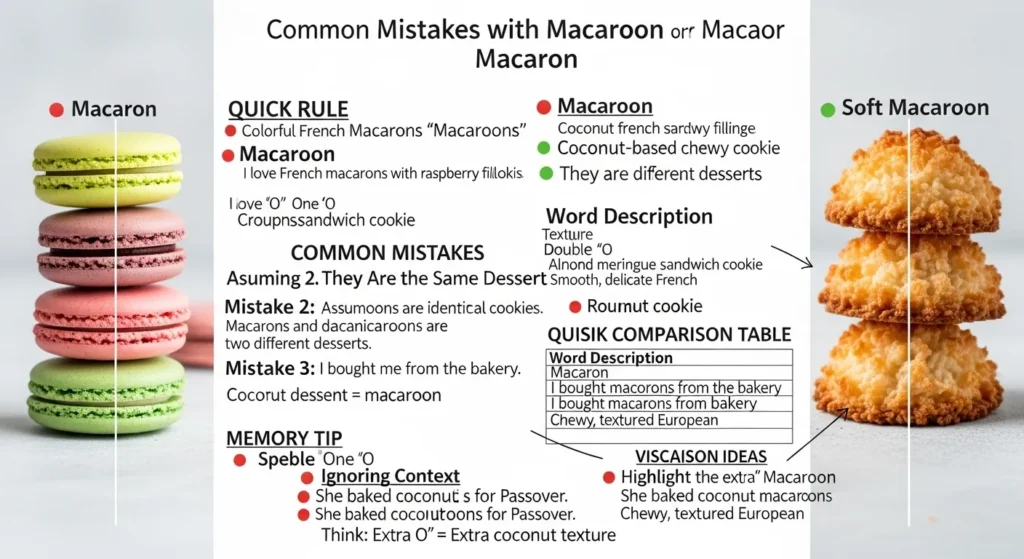
Calling Macarons “Macaroons”
❌ I love French macaroons with raspberry filling.
✅ I love French macarons with raspberry filling.
Assuming They Are the Same Dessert
❌ Macarons and macaroons are identical cookies.
✅ Macarons and macaroons are two different desserts.
Spelling Error
❌ I bought macorons from the bakery.
✅ I bought macarons from the bakery.
Ignoring Context
❌ She baked coconut macarons for Passover.
✅ She baked coconut macaroons for Passover.
Macaron or Macaroon in Everyday Examples
In Café Menus
“Assorted French macarons available.”
In Holiday Recipes
“Classic coconut macaroons for Passover.”
On Social Media
“Colorful macarons make the perfect gift!”
In Baking Blogs
“These chocolate macaroons are soft and chewy.”
Correct spelling shows professionalism.
Macaroon or Macaron: Usage Trends
Search trends show:
- Macaron is popular in food and bakery searches.
- Macaroon is common during holiday seasons.
- Many people mistakenly search “French macaroon.”
Globally, “macaron” has grown in popularity due to Instagram and luxury bakeries.
Both terms remain strong because they describe different treats.
Comparison Table: Macaron vs Macaroon
| Feature | Macaron | Macaroon |
| Origin | France | Europe/US |
| Main Ingredient | Almond flour | Coconut |
| Texture | Light and crisp | Chewy and dense |
| Filling | Yes (cream/ganache) | No filling |
| Same Dessert? | No | No |
Frequently Asked Questions
1. Is macaron the same as macaroon?
No. They are two different desserts.
2. What is a macaron?
A French almond-based sandwich cookie with filling.
3. What is a macaroon?
A coconut cookie, often chewy and flourless.
4. Why do people confuse them?
The words look very similar.
5. Which is more expensive?
Macarons are usually more expensive due to complex preparation.
6. Are macarons gluten-free?
Traditional macarons are gluten-free because they use almond flour.
7. Which word is more common?
Both are common, but “macaron” has grown in popularity recently.
Conclusion
Macaroon or macaron may differ by only one letter, but they describe two completely different desserts. A macaron is a delicate French sandwich cookie made with almond flour and filled with cream. A macaroon is a chewy coconut cookie, often enjoyed during holidays.
I once confused them myself, and that small spelling difference changed my dessert order. Now I always check carefully. If it is colorful, filled, and French, it is a macaron. If it is coconut-based and chewy, it is a macaroon.
Understanding this difference helps in baking, ordering, and writing professionally. One extra “o” truly matters. Now you can confidently use the correct word every time.
Discover More Articles:

I am Mark Twain, a writer who loved the English language for its humor, irony, and everyday comparisons. I used simple words to show deep differences between truth and lies, wisdom and foolishness. My writing proves that clear English is always more powerful than complicated English.