

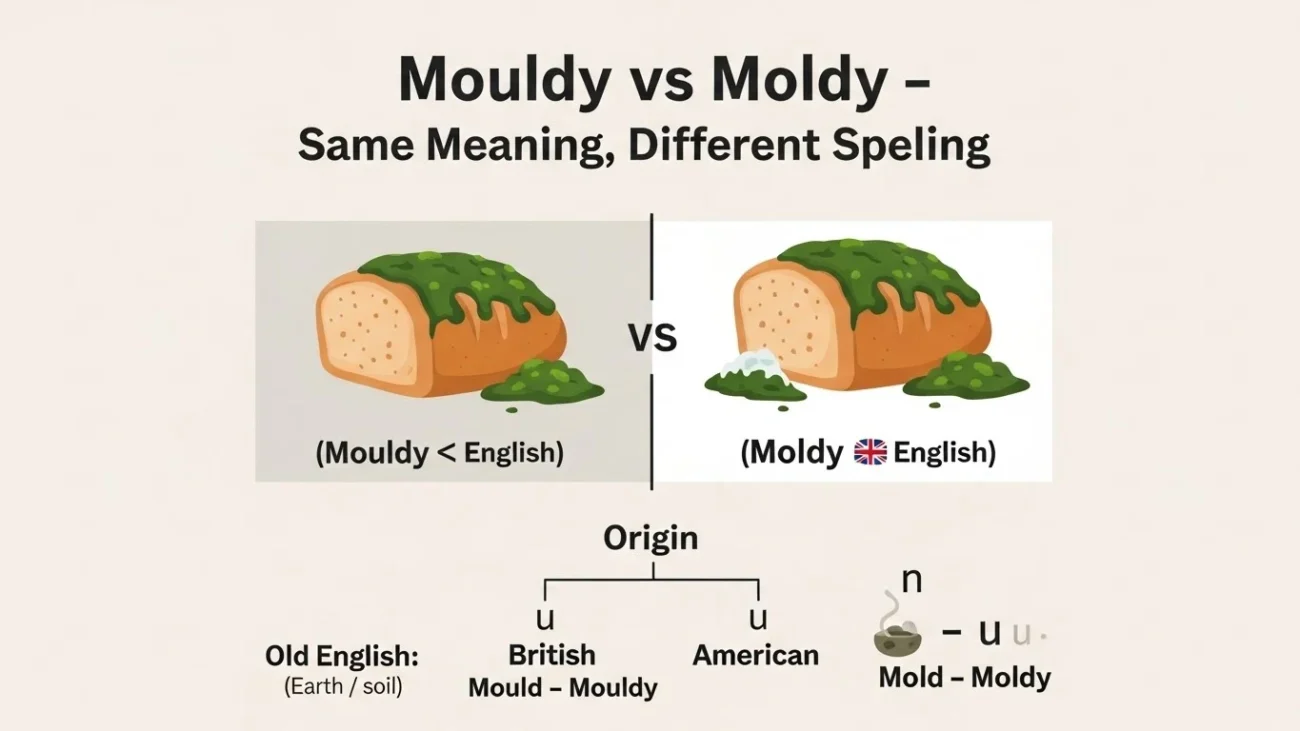
Many people search for mouldy or moldy because both spellings appear correct, yet they look different enough to cause doubt.
You might see mouldy bread in one article and moldy food in another and wonder which spelling is right. The confusion usually happens when reading content from different countries.
The good news is simple: both spellings are correct, but they belong to different forms of English. This article solves that confusion clearly and quickly.
First, you’ll get a direct answer. Then, you’ll learn where the words came from, how British and American English differ, which spelling you should use based on your audience, and common mistakes to avoid.
You’ll also see real-life examples, usage trends, and a comparison table. By the end, you’ll confidently choose the correct spelling every time.
Mouldy or Moldy : Quick Answer
- 🇬🇧 Mouldy → British English
- 🇺🇸 Moldy → American English
Examples:
- The bread smells mouldy. (UK)
- The basement looks moldy. (US)
👉 Meaning is the same in both cases.
Learn More : Goody vs Goodie:Meaning,Use and Common Mistakes Explained
The Origin of Mouldy or Moldy
The word comes from Old English “molde”, meaning earth or soil. Over time, British English kept the -ou- spelling (mould), while American English simplified it to mold.
This pattern appears in many words:
- Colour → Color
- Flavour → Flavor
- Mould → Mold
The difference exists because American English favors simpler spellings.
British English vs American English Spelling
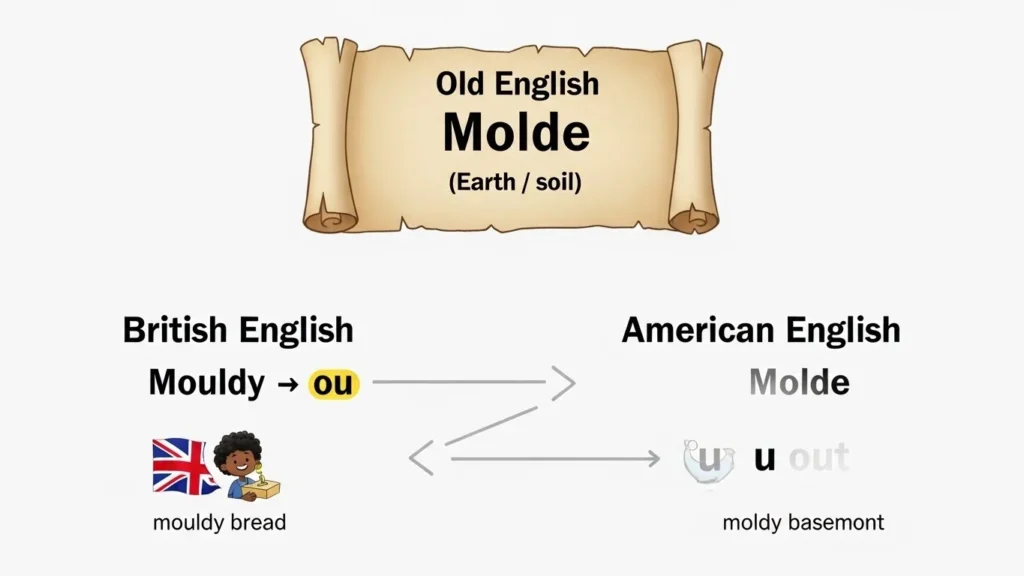
| Feature | British English | American English |
| Spelling | Mouldy | Moldy |
| Base word | Mould | Mold |
| Meaning | Covered with fungus | Covered with fungus |
| Usage region | UK, Commonwealth | USA |
👉 Only the spelling changes, not the meaning.
Which Spelling Should You Use?
Choose based on your audience:
- UK / Commonwealth → Mouldy
- United States → Moldy
- Global or SEO content → Use one version consistently (often moldy)
Tip:
If your website targets American readers, use moldy. For British readers, use mouldy.
Common Mistakes with Mouldy or Moldy
❌ Mixing spellings in one article
✅ Choose one and stay consistent
❌ Using mouldy in American academic writing
✅ Use moldy instead
❌ Thinking meanings are different
✅ They mean the same thing
Another common mistake is assuming that mouldy and moldy describe different types of fungus. In reality, both words refer to the same condition and the same biological process; only the spelling changes by region.
Writers also make the error of switching spellings within the same paragraph, which looks careless and hurts credibility. Some learners believe mouldy sounds more formal and therefore use it everywhere, even in American-focused content, where moldy is expected.
This can confuse readers and reduce clarity. In SEO writing, mixing spellings can also weaken keyword targeting. Another issue appears in academic work, where students use the wrong regional spelling for their exam board.
To avoid these problems, always decide your target audience first and stick to one spelling consistently.
Consistency matters more than preference and helps keep writing professional, clear, and trustworthy.
Mouldy or Moldy in Everyday Examples
Home
- The cheese has gone mouldy/moldy.
Health
- Moldy walls can cause allergies.
Food
- Throw away mouldy bread.
Social Media
- Found a moldy sandwich in my bag 🤢
Mouldy or Moldy : Google Trends & Usage Data
- Moldy dominates searches in the United States
- Mouldy is common in the UK, Australia, and New Zealand
- Global websites often favor moldy for wider reach
👉 Search intent depends on location, not meaning.
Comparison Table: Mouldy vs Moldy
| Aspect | Mouldy | Moldy |
| Correct spelling | ✅ Yes | ✅ Yes |
| British English | ✅ Preferred | ❌ |
| American English | ❌ | ✅ Preferred |
| Meaning | Same | Same |
| SEO global use | Medium | High |
FAQs: Mouldy or Moldy
1. Are mouldy and moldy the same?
Yes, they have identical meanings.
2. Is mouldy wrong in American English?
It’s understood but not preferred.
3. Is moldy wrong in British English?
No, but mouldy is standard.
4. Which spelling is better for SEO?
Moldy, due to higher global search volume.
5. Can I use both in one article?
No, it’s better to stay consistent.
6. Do they mean harmful fungus?
Yes, both describe fungal growth.
Conclusion
The difference between mouldy or moldy is purely regional. Both words describe the same thing food, walls, or objects covered with fungus. British English keeps the traditional spelling mouldy, while American English simplifies it to moldy.
There is no difference in meaning, tone, or correctness. The only thing that matters is your audience. If you write for UK or Commonwealth readers, choose mouldy. If your audience is American or global, moldy is the safer option. Once you choose, stay consistent to keep your writing clean and professional.
In short, mouldy and moldy are both correct spellings with identical meanings. The only difference is regional usage. British English prefers mouldy, while American English uses moldy. Neither spelling is more accurate than the other.
The key to correct usage is knowing your audience and staying consistent throughout your writing. Once you follow this rule, confusion disappears completely.

I am Michael Swan, an English grammarian known for explaining confusing grammar and word comparisons in a clear way. I focused on real usage, not just rules, helping learners understand why English works the way it does. My work simplifies complex language problems for everyday users.