

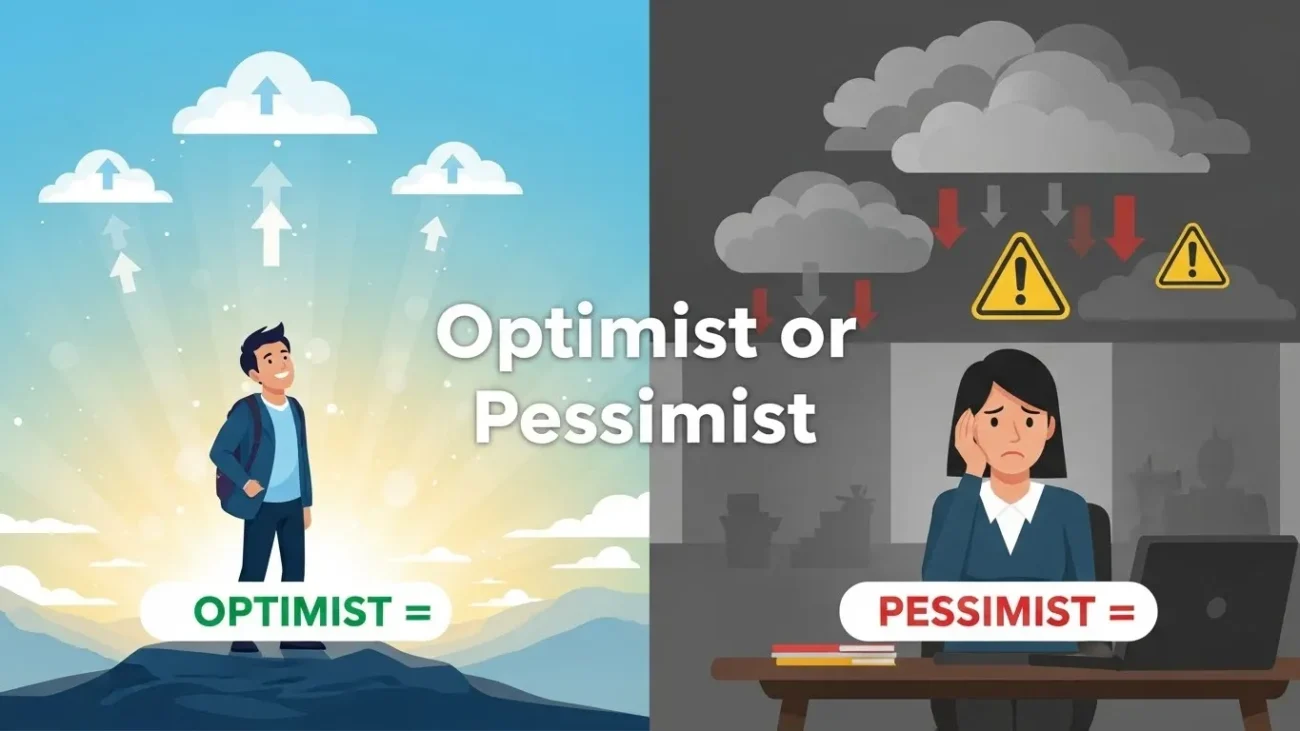
I remember once pausing mid-sentence, unsure whether optimist or pessimist was the right choice.
That moment showed me why so many people search for pessimist or optimist online.
I had assumed these words described temporary moods, but I later realized they reflect a general mindset. In workplaces, psychology discussions, and everyday conversations, using the wrong word can completely change meaning.
An optimist expects positive outcomes, while a pessimist anticipates negative ones. In this article, I clear the confusion with simple explanations, real examples, and common mistakes so you can confidently choose optimist vs pessimist every time.
Optimist or Pessimist: Quick Answer
- Optimist → A person who expects positive or good outcomes
- Pessimist → A person who expects negative or bad outcomes
Examples:
- She is an optimist who believes things will improve. ✅
- He is a pessimist who expects problems. ✅
Simple rule:
👉 Hopeful thinking = optimist
👉 Negative expectations = pessimist
Learn More : Analyser or Analyzer : W:hich Spelling Is Correct?
The Origin of Optimist and Pessimist
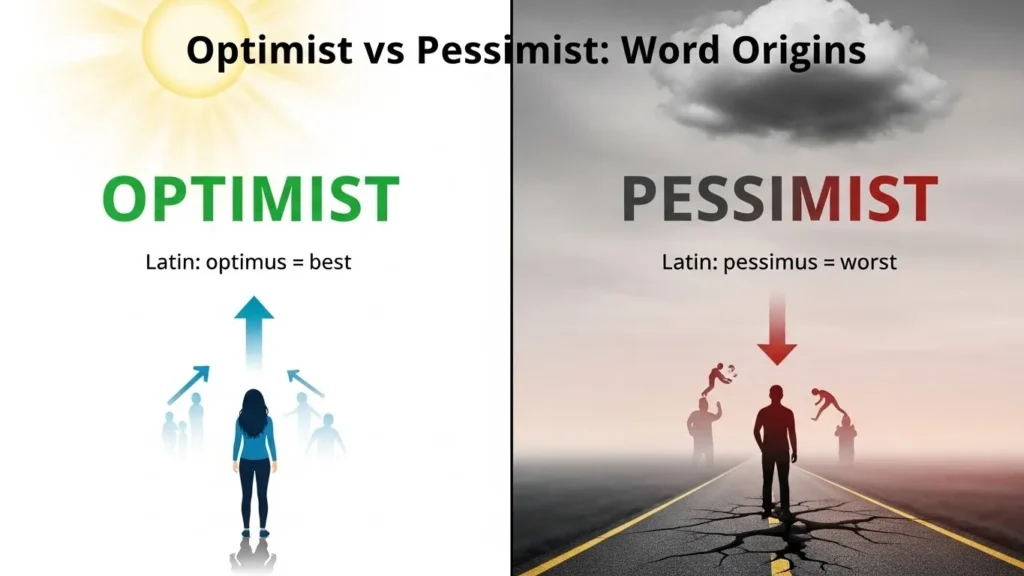
Origin of Optimist
The word optimist comes from the Latin optimus, meaning best. It entered English in the 18th century to describe people who believe the best outcome is likely.
Origin of Pessimist
The word pessimist comes from the Latin pessimus, meaning worst. It developed as the opposite of optimist, referring to those who expect unfavorable outcomes.
Why the contrast is strong:
The words were formed as direct opposites, making their meanings clear but often confused in casual speech.
British English vs American English Usage
There is no difference between British and American English for optimist or pessimist.
| Aspect | Optimist | Pessimist |
| Meaning | Positive outlook | Negative outlook |
| UK usage | Same as US | Same as US |
| US usage | Same as UK | Same as UK |
| Spelling | Same | Same |
Key point:
This is a meaning difference, not a spelling or regional one.
Which One Should You Use?
Use Optimist when:
- Describing someone who expects good results
- Talking about hope, confidence, or positivity
- Referring to a long-term outlook, not a single mood
Examples:
- An optimist sees opportunity in problems.
- She remains an optimist despite challenges.
Use Pessimist when:
- Describing someone who expects failure or difficulty
- Talking about doubt or negativity
- Referring to a general mindset
Examples:
- A pessimist expects the worst.
- He is a pessimist about the economy.
Professional tip:
👉 Ask yourself: Does the person expect good or bad outcomes?
Common Mistakes with Optimist or Pessimist
1. Using them for short moods
❌ “I’m an optimist today.”
✅ “I feel optimistic today.”
2. Confusing nouns and adjectives
❌ “She is very optimist.”
✅ “She is very optimistic.”
3. Mixing opposites
❌ “He’s a pessimist but always expects success.”
✅ “He’s an optimist.”
4. Overgeneralizing people
❌ “Optimists never worry.”
✅ “Optimists tend to worry less.”
Another common mistake is labeling situations instead of people.
❌ “The plan is an optimist.”
✅ “The plan is optimistic.”
People also misuse these words sarcastically, which creates confusion in formal writing.
❌ “He’s an optimist about failure.”
✅ “He’s pessimistic about success.”
Some writers wrongly assume pessimism always equals negativity. In reality, pessimists may simply be cautious or analytical.
❌ “Pessimists are lazy thinkers.”
✅ “Pessimists often focus on risks.”
Finally, avoid forcing labels. A person can be optimistic in life but pessimistic about a specific situation.
Optimist or Pessimist in Everyday Examples
Workplace
- “An optimist motivates the team.”
- “A pessimist focuses on risks.”
Personal Life
- “She’s an optimist about the future.”
- “He’s a pessimist by nature.”
Education
- “Optimists handle stress better.”
- “Pessimists fear poor results.”
Social Media
- “Stay positive—be an optimist ✨.”
- “Stop being such a pessimist.”
News
- “Market optimists expect growth.”
- “Economic pessimists warn of slowdown.”
Optimist or Pessimist: Google Trends & Usage Data
Search trends show both terms are widely used, often in psychology, business, and self-help contexts.
| Term | Popularity | Common Context |
| Optimist | High | Motivation, growth |
| Pessimist | High | Warnings, risks |
| Optimistic | Very High | Emotions |
| Pessimistic | Very High | Analysis |
Insight:
People often search both terms together to compare mindsets.
Comparison Table: Optimist vs Pessimist
| Feature | Optimist | Pessimist |
| Outlook | Positive | Negative |
| Expectation | Best outcome | Worst outcome |
| Focus | Hope & opportunity | Risk & problems |
| Related adjective | Optimistic | Pessimistic |
| Opposite of | Pessimist | Optimist |
FAQs: Optimist or Pessimist
1. Are optimist and pessimist opposites?
Yes. They describe opposite outlooks.
2. Is being an optimist always good?
Not always. Too much optimism can ignore risks.
3. Is being a pessimist always bad?
No. Pessimists can be realistic and cautious.
4. What is the adjective form of optimist?
Optimistic.
5. What is the adjective form of pessimist?
Pessimistic.
6. Can someone be both?
Yes. People can be situationally optimistic or pessimistic.
7. Is there a UK vs US difference?
No. Usage is the same.
Conclusion
The difference between optimist or pessimist lies in expectation and outlook. An optimist expects positive results and focuses on hope, while a pessimist expects negative outcomes and focuses on risks. These words describe general attitudes, not short-term emotions.
To use them correctly:
- 🌟 Use optimist for positive thinkers
- ⚠️ Use pessimist for negative thinkers
Understanding this distinction helps you describe people, attitudes, and situations more accurately and professionally.

I am Sidney Greenbaum, a linguist who studied how English is actually used, not just how it is taught. I analyzed sentence structure and word differences to make English clearer and more practical. My research helped learners understand real-world English comparisons.