

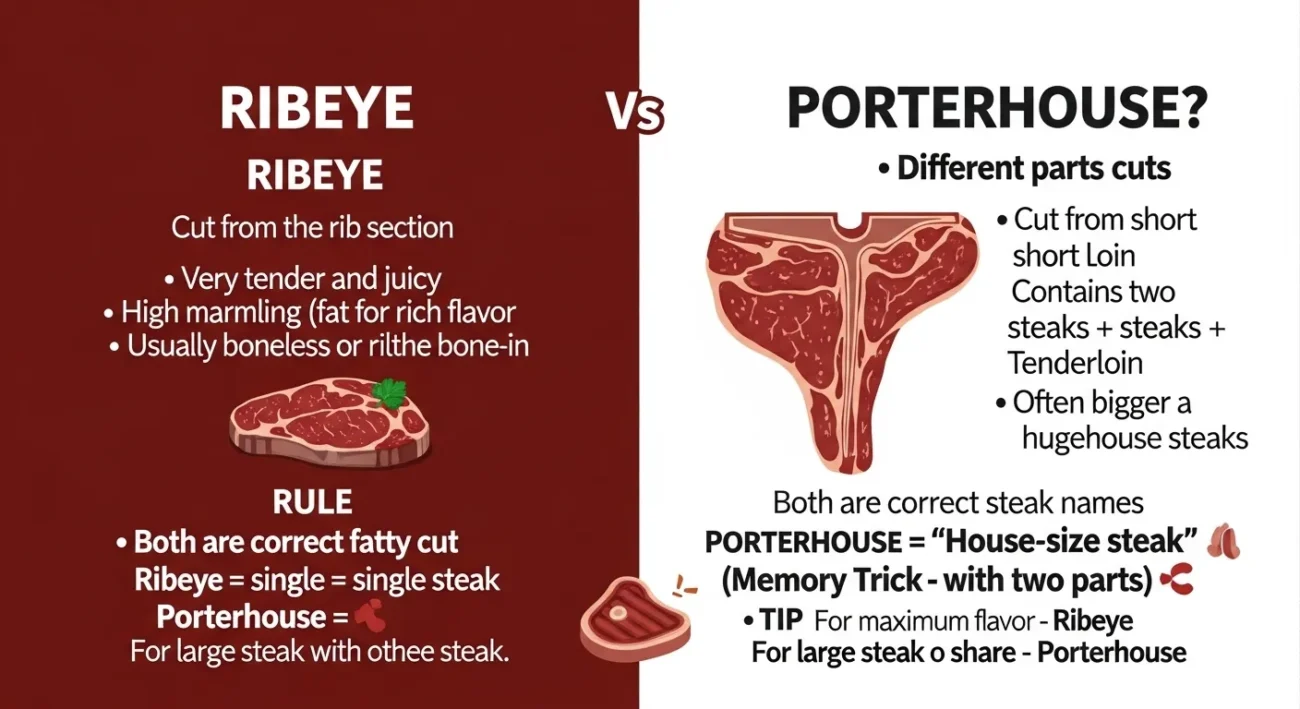
Ribeye or porterhouse? The quick answer is simple: ribeye is known for rich marbling and tenderness, while porterhouse includes two different steak cuts separated by a bone.
I once stood in a steakhouse menu line trying to choose between these two. Both sounded delicious, but I did not know the real difference.
Many people search this keyword because the steaks often appear on restaurant menus, cooking shows, and grocery stores. They look similar, but they come from different parts of the cow and taste different. This guide explains the difference clearly.
I will cover the origin of the names, cooking characteristics, common mistakes, and real-life examples so you can choose the right steak every time.
Ribeye or Porterhouse : Quick Answer
Ribeye is a tender steak cut from the rib section of the cow. It has a lot of marbling, which means small streaks of fat that make the meat juicy and flavorful.
Porterhouse is a larger steak that contains two cuts in one: a strip steak on one side and a tenderloin on the other side, separated by a T-shaped bone.
Examples:
- ✅ I grilled a ribeye steak for dinner because I wanted a juicy and rich flavor.
- ✅ The restaurant served a porterhouse steak big enough for two people.
Simple rule:
- Ribeye = rich and fatty steak
- Porterhouse = two steaks in one
The Origin of Ribeye or Porterhouse
The name ribeye comes from the rib section of the cow. The “eye” refers to the center of the steak, which looks like a round eye shape surrounded by fat. This cut became popular in American steakhouses because of its strong flavor.
The porterhouse name has an interesting history. Some historians believe it came from old porter houses pubs that served porter beer in the 1800s. These establishments served large steaks to travelers and workers, and the name stuck.
Both steaks became famous in steakhouses across the United States and later spread worldwide through restaurant culture and cooking shows.
British English vs American English Spelling
Unlike many English words, ribeye and porterhouse have almost identical spelling in both British and American English.
Sometimes, the ribeye may appear as rib-eye in British menus, but the meaning remains the same.
Spelling Comparison Table
| Steak Name | British English | American English | Notes |
| Ribeye | Rib-eye / Ribeye | Ribeye | Same meaning |
| Porterhouse | Porterhouse | Porterhouse | No difference |
The spelling difference is minor and does not change the steak itself.
Which Spelling Should You Use?
Use ribeye when referring to the single steak cut from the rib area. This is common in American restaurants and grocery stores.
Use porterhouse when referring to the large steak that includes both tenderloin and strip steak.
If writing for a global audience:
- Use ribeye (most common spelling worldwide).
- Use porterhouse as standard.
Consistency is the key. Do not switch spellings within the same article or menu.
Common Mistakes with Ribeye or Porterhouse
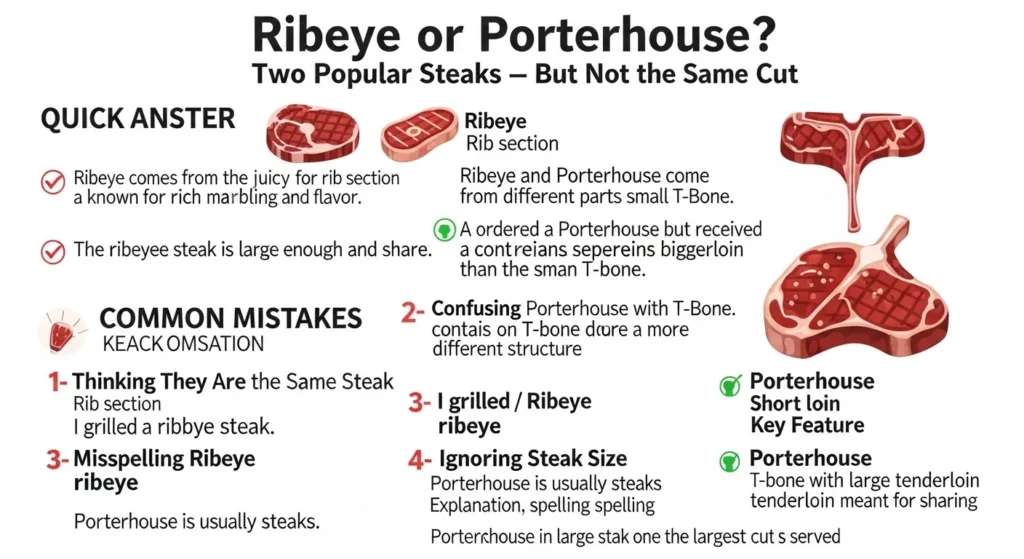
Mistake 1: Thinking they are the same steak
❌ Ribeye and porterhouse are the same cut of beef.
✅ Ribeye and porterhouse come from different parts of the cow.
Mistake 2: Confusing porterhouse with T-bone
❌ I ordered a porterhouse but received a small T-bone steak.
✅ A porterhouse is larger and contains a bigger tenderloin than a T-bone.
Mistake 3: Misspelling ribeye
❌ I grilled a rib-eye steak and spelled it ribbye.
✅ I grilled a ribeye steak.
Mistake 4: Ignoring steak size
❌ Porterhouse is usually a small steak.
✅ Porterhouse is usually a large steak meant for sharing.
Ribeye and Porterhouse in Everyday Examples
Restaurant Menu:
“12 oz Ribeye Steak with garlic butter.”
Food Blog:
“The porterhouse steak is perfect for sharing.”
Social Media Post:
“Grilled ribeye tonight 🔥 Best steak ever.”
Cooking Guide:
“A porterhouse contains both a strip steak and a tenderloin.”
These examples show how each word appears naturally in food writing.
Porterhouse or Ribeye: Google Trends & Usage Data
Search interest shows that ribeye is searched more frequently worldwide. This is because it is a common steak sold in grocery stores.
However, porterhouse spikes in searches around grilling seasons and holidays when people plan large meals.
Countries with strong steak culture, such as the United States and Australia, show high search activity for both cuts.
Cooking websites and grilling forums often compare these two steaks to help buyers choose the right cut.
Quick Comparison Table of Ribeye vs Porterhouse
| Feature | Ribeye | Porterhouse |
| Cut Location | Rib section | Short loin |
| Bone | Usually boneless or small bone | Large T-shaped bone |
| Flavor | Very rich and fatty | Balanced flavor |
| Size | Medium steak | Large steak |
| Best For | Juicy flavor lovers | Sharing meals |
FAQs
1. Which steak is more tender, ribeye or porterhouse?
Both are tender, but ribeye feels juicier because of its fat marbling.
2. Is porterhouse the same as T-bone?
They are similar, but porterhouse has a larger tenderloin portion.
3. Which steak is more expensive?
Porterhouse can cost more because it contains two cuts of meat.
4. Is ribeye good for grilling?
Yes. Ribeye is one of the best steaks for grilling due to its fat content.
5. Why is porterhouse so big?
It includes two different steak sections separated by a bone.
6. Which steak is better for beginners to cook?
Ribeye is easier because its fat keeps it juicy.
7. Can one porterhouse feed two people?
Yes. Many restaurants serve porterhouse steaks for sharing.
Conclusion
Ribeye or porterhouse may look similar on a menu, but they are quite different. Ribeye comes from the rib section of the cow and is famous for its rich marbling and juicy flavor.
Porterhouse comes from the short loin and contains two steaks in one: a strip steak and a tenderloin separated by a T-shaped bone. When choosing between them, think about what you want. If you prefer intense flavor and tenderness, ribeye is an excellent choice.
If you want a large steak that offers two textures and can be shared, porterhouse is perfect. Understanding these differences makes ordering or cooking steak much easier. The next time you see these options on a menu, you will know exactly what to expect.
Discover More Articles:

I am Sidney Greenbaum, a linguist who studied how English is actually used, not just how it is taught. I analyzed sentence structure and word differences to make English clearer and more practical. My research helped learners understand real-world English comparisons.