

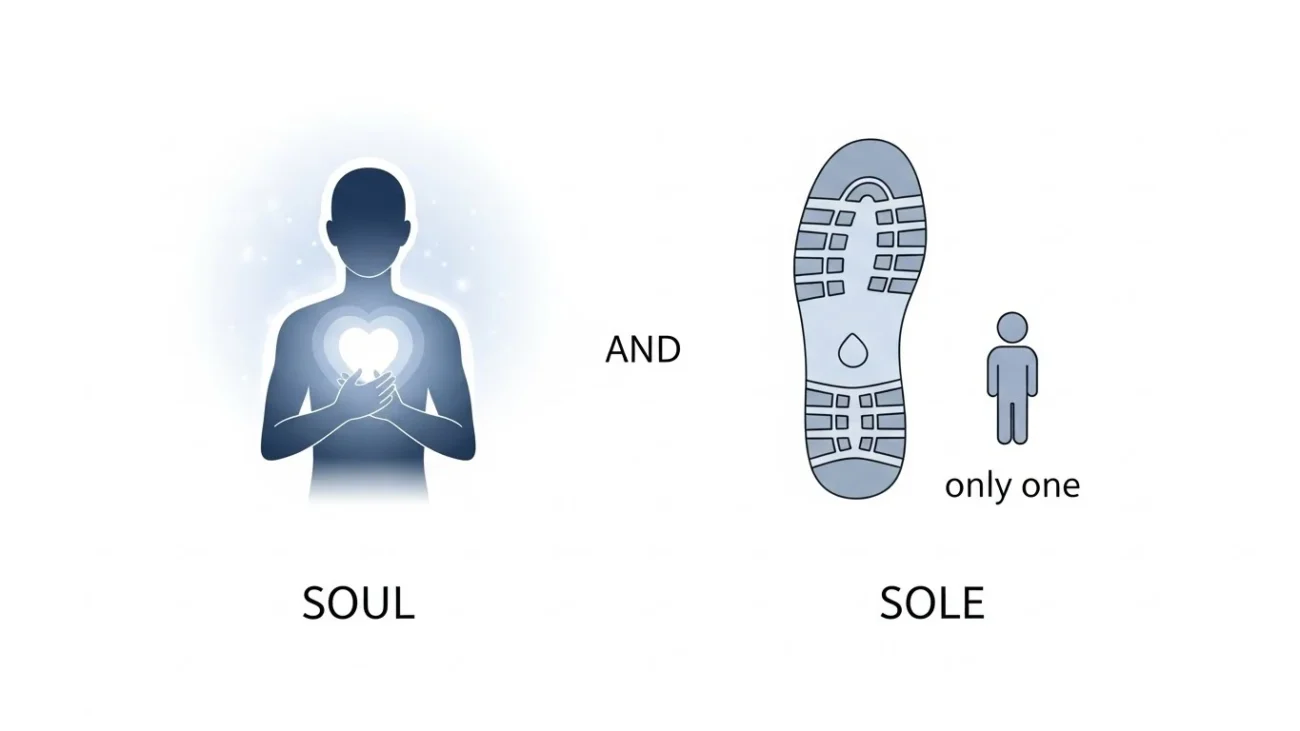
The English language is full of words that sound the same but mean very different things. Soul or sole is one of the most common examples.
People often search for this keyword because these words are pronounced alike, yet their meanings are completely unrelated.
A small mistake can turn a deep emotional sentence into a confusing one or make a serious sentence sound funny.
I’ve seen writers describe shoes when they meant feelings, or emotions when they meant feet. This confusion happens in emails, essays, poetry, captions, and even exams.
That’s why understanding soul or sole is important, especially for students, content writers, and non native English speakers.
This article gives you a quick answer first, then explains meanings, origins, usage, examples, common mistakes, and professional advice.
By the end, you’ll clearly know when to use soul and when to use sole, without second-guessing.
Soul or Sole : Quick Answer
Soul refers to the spiritual, emotional, or inner part of a person.
Sole means only one, or the bottom part of a foot or shoe.
Examples:
- Music touches my soul.
- He is the sole owner of the company.
- The sole of my shoe is damaged.
👉 Feelings or spirit → Soul
👉 Only one or bottom part → Sole
Discover More Article:Genius or Genious : Which Spelling Is Correct and Why?
The Origin of Soul or Sole
Soul comes from Old English sāwol, meaning spirit or life force. For centuries, it has been linked with emotions, faith, and identity.
Sole comes from Latin solus, meaning alone, and solea, meaning sandal. This explains its two meanings:
- only one
- bottom of the foot or shoe
The confusion exists because:
- Both words sound the same
- Both are short and common
- Context is the only clear difference
British English vs American English Spelling
There is no spelling difference between British and American English for soul or sole.
| Aspect | British English | American English |
| Soul | Same spelling, same meaning | Same spelling, same meaning |
| Sole | Same spelling, same meaning | Same spelling, same meaning |
| Difference | Meaning-based | Meaning-based |
👉 This is a homophone issue, not a spelling variation.
Which Spelling Should You Use?
Choose based on context, not region.
- US audience → Same rules apply
- UK/Commonwealth → Same rules apply
- Global writing → Context must be clear
Quick tip:
If the sentence talks about emotion, spirit, or heart → soul
If it talks about only one or feet/shoes → sole
Common Mistakes with Soul or Sole
❌ He is the sole of the family.
✅ He is the soul of the family.
❌ Music heals my sole.
✅ Music heals my soul.
❌ She is the soul survivor.
✅ She is the sole survivor.
Memory trick:
- Soul → emotions (both start with s)
- Sole → single / shoe
Why Confusing Soul and Sole Can Change the Meaning of Your Sentence
Using soul instead of sole, or vice versa, may look like a small spelling error, but it can completely change the meaning of a sentence. In English writing, especially in exams, professional emails, or published content, such mistakes can confuse readers or reduce credibility.
This confusion becomes more serious in formal writing such as business documents, academic essays, and legal content. Saying “the soul responsibility” instead of “the sole responsibility” can make writing look careless or unprofessional. Similarly, poets and creative writers lose emotional impact if they accidentally use sole where soul is required.
For non-native English speakers, this mistake often happens because both words sound exactly the same. Spellcheck tools may not catch the error because both spellings are correct words. That’s why understanding meaning not sound is essential. Learning to pause and check context before choosing between soul or sole can greatly improve accuracy, confidence, and overall writing quality.
Soul or Sole in Everyday Examples
Emails
- She is the sole contact person.
- Thank you from the bottom of my soul.
News
- He is the sole witness of the case.
- The artist poured his soul into the painting.
Social Media
- Peace feeds my soul.
- Traveling alone was my sole decision.
Formal Writing
- The company has a sole authority.
- Literature reflects the human soul.
Soul or Sole : Google Trends & Usage Data
Search trends show:
- Soul is more common in poetry, religion, and quotes
- Sole is common in business, law, and footwear contexts
- High confusion searches come from students and ESL learners
Top regions searching this keyword:
- India
- Pakistan
- United States
- United Kingdom
👉 Users mostly want clear examples, not grammar theory.
Comparison Table: Soul vs Sole
| Feature | Soul | Sole |
| Meaning | Spirit, emotions | Only one / foot bottom |
| Type | Noun | Noun / Adjective |
| Context | Emotional, spiritual | Business, physical |
| Common Error | Used for “only one” | Used for emotions |
| Pronunciation | Same | Same |
FAQs: Soul or Sole
1. Are soul and sole pronounced the same?
Yes, they sound exactly the same.
2. Can sole mean only one?
Yes, like sole owner.
3. Does soul ever mean foot?
No, never.
4. Is this a US vs UK spelling issue?
No, it’s a meaning difference.
5. Which word is more emotional?
Soul.
6. Which word is used in business writing?
Sole.
7. Can sole be an adjective?
Yes, e.g., sole survivor.
Conclusion
The difference between soul or sole is simple, yet powerful. One word speaks to emotions and spirit, while the other points to uniqueness or physical structure. Because they sound identical, writers often confuse them, but context always reveals the correct choice.
If your sentence talks about feelings, heart, faith, or identity, the correct word is soul. If it refers to only one person, one thing, or the bottom of a shoe or foot, then sole is the right choice. There is no regional spelling difference only correct usage.
Mastering word pairs like soul or sole improves clarity, confidence, and professionalism in your English writing. Small details make a big difference.

I am Mark Twain, a writer who loved the English language for its humor, irony, and everyday comparisons. I used simple words to show deep differences between truth and lies, wisdom and foolishness. My writing proves that clear English is always more powerful than complicated English.