

Many people search for vez or ves because these spellings look almost identical and often appear in informal writing, usernames, brand names, or non native English text.
I have noticed that writers frequently pause when choosing between them, unsure whether one is correct English or just a variation.
The confusion grows because vez appears in other languages, while ves shows up in English words but rarely stands alone.
vez vs ves helps solve a clear problem: is vez an English word, is ves correct, or are both wrong depending on context? Understanding this saves time, avoids spelling errors, and helps you write with confidence.
Vez or Ves: Quick Answer
Neither vez nor ves is a standard standalone English word.
Their correctness depends entirely on language, abbreviation, or context.
Examples:
- Vez is commonly used in Spanish or Portuguese, not English.
- Ves appears in English only as part of other words, not alone.
If you are writing in English, both are usually incorrect unless used as names, slang, or abbreviations.
The Origin of Vez or Ves
The word vez comes from Latin vicis, meaning “turn” or “occasion.” It entered Spanish and Portuguese and is still widely used today.
Example in Spanish: una vez (one time).
The form ves has no independent origin in English. It appears as:
- A verb form in Spanish (tú ves = you see)
- A plural ending or sound pattern in English words like loves or lives
This difference exists because English did not adopt vez as a word, while ves never developed standalone meaning.
British English vs American English Spelling
There is no British vs American spelling difference for vez or ves because neither is a valid English word.
| Aspect | British English | American English |
| Vez | Not used | Not used |
| Ves | Not used alone | Not used alone |
| Dictionary status | Invalid | Invalid |
| Accepted meaning | None | None |
Any use in English is usually informal, borrowed, or incorrect.
Which Spelling Should You Use?
Your choice depends on language and purpose, not region.
- Writing in English: Avoid both vez and ves.
- Writing in Spanish or Portuguese: Use vez correctly.
- Brand names / usernames: Either may be used stylistically.
- Academic or professional English: Do not use either.
If your audience is global and English-speaking, replacing both with a proper English word is best.
Common Mistakes with Vez or Ves
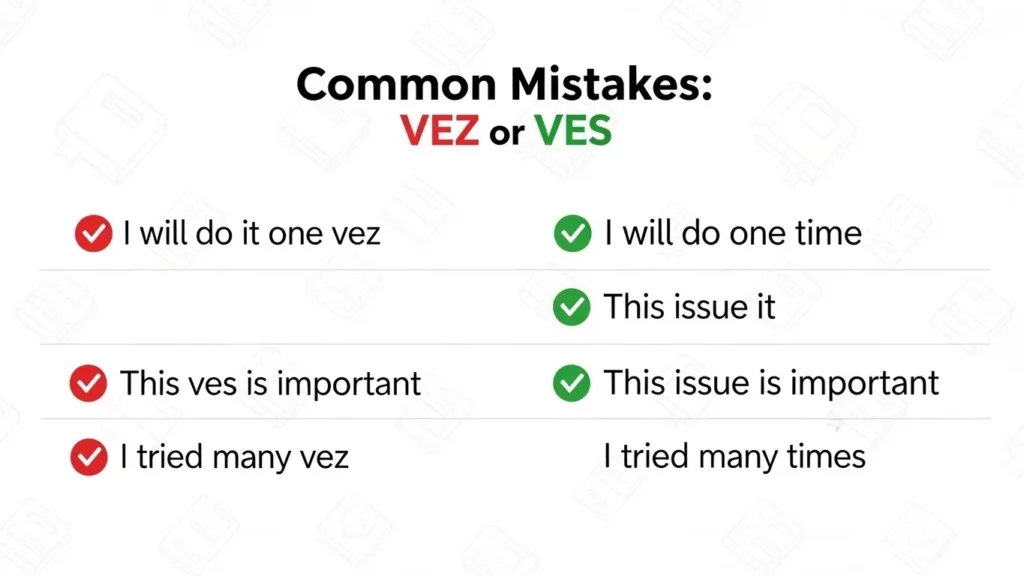
These errors happen often:
- ❌ I will do it one vez
✅ I will do it one time - ❌ This ves is important
✅ This issue is important - ❌ I tried many vez
✅ I tried many times
The main mistake is assuming these words work like English nouns.
Learn More :Whimp or Wimp: Which Spelling Is Correct and Why It Matters
Vez or Ves in Everyday Examples
Emails:
- ❌ Please try again one vez
- ✅ Please try again one time
Social Media:
- “First vez doing this” ❌
- “First time doing this” ✅
Formal Writing:
- Avoid both words completely.
News or Articles:
- These terms are not used unless quoting foreign language content.
Vez or Ves: Google Trends & Usage Data
Search trends show vez is far more popular than ves, mainly due to Spanish and Portuguese speakers. Countries like Brazil, Mexico, Spain, and Argentina drive searches for vez.
Ves appears less often and is usually linked to typing errors, abbreviations, or confusion. In English-speaking countries, both terms are searched mostly for spelling clarification, not usage.
Comparison Table: Vez or Ves
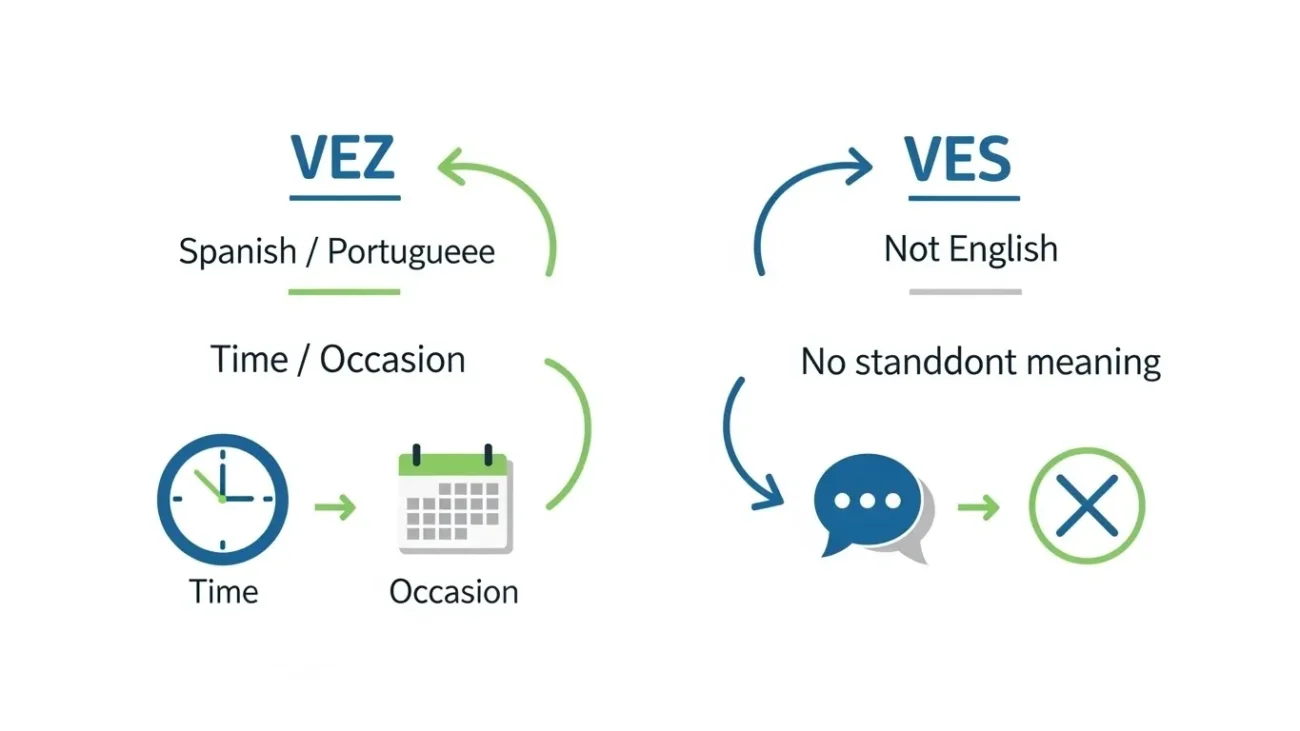
| Word | Language | Valid Alone? | Meaning |
| Vez | Spanish / Portuguese | Yes | Time / occasion |
| Ves | English | No | No standalone meaning |
FAQs
1. Is vez an English word?
No, it is Spanish and Portuguese.
2. Is ves correct in English?
No, not as a standalone word.
3. Can I use vez in casual English?
Only in slang or stylistic writing.
4. Is ves a verb in English?
No, but it is in Spanish.
5. Are vez or ves accepted in formal writing?
No, avoid both.
6. Why do people confuse vez and ves?
Because they look similar and appear online.
7. Can they be used as brand names?
Yes, as creative choices.
Conclusion
The confusion around vez or ves comes from language overlap and internet usage, not English grammar rules. In standard English, neither word works as a correct standalone term.
Vez belongs to Spanish and Portuguese, while ves has no independent English meaning. I always recommend checking your audience and language before using either.
If you are writing in English, replacing them with words like time, turn, or occasion is the safest choice. Using these correctly avoids misunderstandings and improves clarity. Small spelling choices like this can affect how professional and accurate your writing appears.
When in doubt, choose a proper English equivalent and move forward confidently.

I am Michael Swan, an English grammarian known for explaining confusing grammar and word comparisons in a clear way. I focused on real usage, not just rules, helping learners understand why English works the way it does. My work simplifies complex language problems for everyday users.