

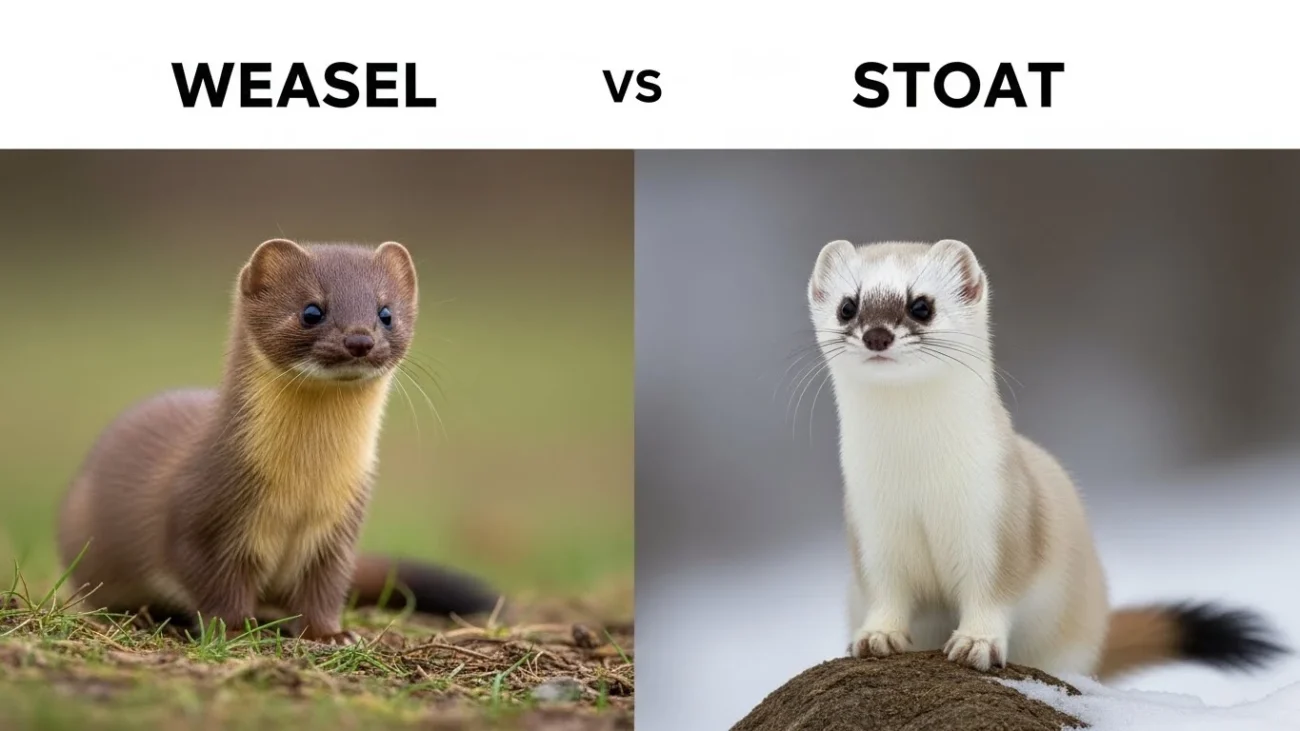
Many people search for weasel or stoat because these words are often used as if they mean the same thing.
Both describe small, slender animals, and in everyday speech people casually swap them. The confusion grows because one word is also used figuratively to describe a person’s behavior, while the other is not.
I’ve noticed that readers often ask: Is a stoat just another name for a weasel? Or Why does “weasel” sound negative when “stoat” doesn’t? These are valid questions.
The answer lies in biology, regional usage, and metaphor.
This article clears up the confusion in a simple way. You’ll get a quick answer first, followed by origins, British vs American usage, common mistakes, real-life examples, and usage advice.
By the end, you’ll clearly understand when to use weasel, when stoat is correct, and why mixing them up can change meaning.
Weasel or Stoat : Quick Answer
Weasel is a general term for small carnivorous mammals and is also used figuratively for an untrustworthy person.
Stoat is a specific species of weasel, also called the ermine.
Examples:
- A weasel slipped through the fence.
- The stoat turns white in winter.
- He tried to weasel out of responsibility.
👉 General animal or behavior → Weasel
👉 Specific animal species → Stoat
Read More: Confused Between Rogue and Rouge? Here’s the Clear Answer
The Origin of Weasel or Stoat
Weasel comes from Old English wæsel, referring to small, quick mammals. Over time, the word gained a figurative meaning for someone sneaky or dishonest.
Stoat comes from Middle English stote, used to describe a specific kind of weasel with a black-tipped tail. In winter, this animal becomes white and is called an ermine.
The confusion exists because:
- A stoat is a type of weasel
- Both animals look similar
- Only “weasel” evolved into a metaphor
British English vs American English Spelling
There is no spelling difference, but usage varies.
| Aspect | British English | American English |
| Weasel (animal) | Common | Common |
| Stoat | Common | Less common |
| Ermine (winter stoat) | Known | More common term |
👉 Americans often say ermine, while Brits say stoat.
Which Spelling Should You Use?
Choose based on context and audience.
- General writing → Weasel
- Wildlife or biology → Stoat
- UK audience → Stoat is familiar
- US audience → Weasel or ermine
Professional advice:
Never use stoat metaphorically. Only weasel works that way.
Common Mistakes with Weasel or Stoat
❌ He stoated his way out of trouble.
✅ He weaseled his way out of trouble.
❌ All weasels turn white in winter.
✅ Only stoats turn white in winter.
❌ The politician is a stoat.
✅ The politician is a weasel.
Memory trick:
- Weasel → words & behavior
- Stoat → animal only
This distinction matters in exams, wildlife articles, and figurative writing. Using weasel instead of stoat can change scientific accuracy, while using stoat metaphorically sounds incorrect. Choosing the right word shows language awareness and prevents confusion between literal animal meaning and figurative human behavior.
Writers, students, and content creators often confuse these terms when simplifying language. If clarity improves when weasel is reserved for general or figurative use and stoat for biological accuracy. This careful word choice strengthens credibility, especially in educational content, nature writing, and exam
Weasel or Stoat in Everyday Examples
News
- Farmers reported damage caused by weasels.
Nature Writing
- The stoat changes color with the seasons.
Conversation
- Don’t weasel out of your promise.
Education
- A stoat is also called an ermine in winter.
Weasel or Stoat : Google Trends & Usage Data
Usage trends show:
- Weasel is searched more globally
- Stoat searches are higher in the UK
- Figurative use boosts “weasel” popularity
Common contexts:
- Wildlife articles
- Idioms and metaphors
- School biology questions
👉 Most searches aim to clarify animal vs metaphor.
Comparison Table: Weasel vs Stoat
| Feature | Weasel | Stoat |
| Type | General term | Specific species |
| Metaphorical use | Yes | No |
| Turns white in winter | No | Yes |
| US usage | Very common | Rare |
| UK usage | Common | Common |
FAQs: Weasel or Stoat
1. Is a stoat a weasel?
Yes, a stoat is a type of weasel.
2. Do all weasels turn white?
No, only stoats do.
3. What is an ermine?
A stoat in its white winter coat.
4. Can stoat be used as an insult?
No, only weasel is used figuratively.
5. Is stoat British English?
It’s used more often in the UK.
6. Why does weasel sound negative?
Because it developed a metaphorical meaning.
7. Which word is safer in writing?
Weasel, unless you mean the exact species.
Conclusion
The difference between weasel or stoat is about scope and meaning. A weasel is a general animal term and a powerful metaphor for sneaky behavior.
A stoat is a specific species, known for its seasonal color change and black tipped tail.
There is no spelling conflict between British and American English, only usage preference. If you’re writing casually or figuratively, weasel is the correct choice.
If you’re writing about wildlife or biology, stoat is precise and accurate.
Understanding this difference improves clarity, accuracy, and confidence in your English writing.

I am Michael Swan, an English grammarian known for explaining confusing grammar and word comparisons in a clear way. I focused on real usage, not just rules, helping learners understand why English works the way it does. My work simplifies complex language problems for everyday users.