

Everyone thinks they know what they want from a recliner: something soft, something that leans back. Then they sit in one for an hour, stand up with a stiff lower back, and realize that softness and support are not the same thing. A recliner is a piece of furniture you use in a state of total relaxation, which means every flaw in its design is amplified. The wrong angle strains the neck. The wrong seat depth cuts off circulation behind the knees. The wrong mechanism fights you every time you stand.
That is why recliners deserve more scrutiny than almost any other seat in the house. This guide breaks down what actually matters when you shop, from the shape of the backrest to the way the chair fits the room around it. It avoids spec sheets and jargon in favor of the questions you can answer by sitting down, paying attention, and trusting your body.
Why a Recliner Is Not Just a Relaxed Sofa Seat
The best way to judge a recliner chair is to think of it as a piece of ergonomic equipment that happens to look like furniture. The reclining angle changes the relationship between your spine, hips, and legs, and small errors become noticeable after twenty minutes. A seat that feels wonderful for a quick sit may be miserable for an evening of reading, which is precisely why showroom impressions can mislead.
Pay attention to what your body does when the chair reclines. Does your lower back stay in contact with the backrest, or does a gap open up that you have to fill with a cushion? Do your feet rest flat, or do they dangle and pull at the back of your thighs? A good chair keeps you supported at every angle, so you can shift positions without hunting for comfort.
What Happens to Your Spine When You Recline
As the backrest tilts, the pelvis tends to rotate backward, flattening the natural curve of the lower spine. Well-designed recliners counter this with a lumbar area shaped to maintain that curve, often through a slight forward bulge or a segmented cushion. If a chair uses a single flat cushion from hips to shoulders, you will feel the difference within minutes. Press your palm into the lumbar region while seated and note whether it pushes back gently or collapses under light pressure.
Neck and Shoulder Support
The headrest is where many recliners fall short. In a fully reclined position, your head needs somewhere to rest that keeps your chin level, not tipped toward your chest or craned forward. An adjustable headrest lets you raise or lower the support as your posture changes, while a fixed one works only if the rest of the chair happens to fit your height. If you plan to watch television or read in the chair, test the headrest at several recline angles, not just the most upright one.
Manual or Power: Choosing the Mechanism
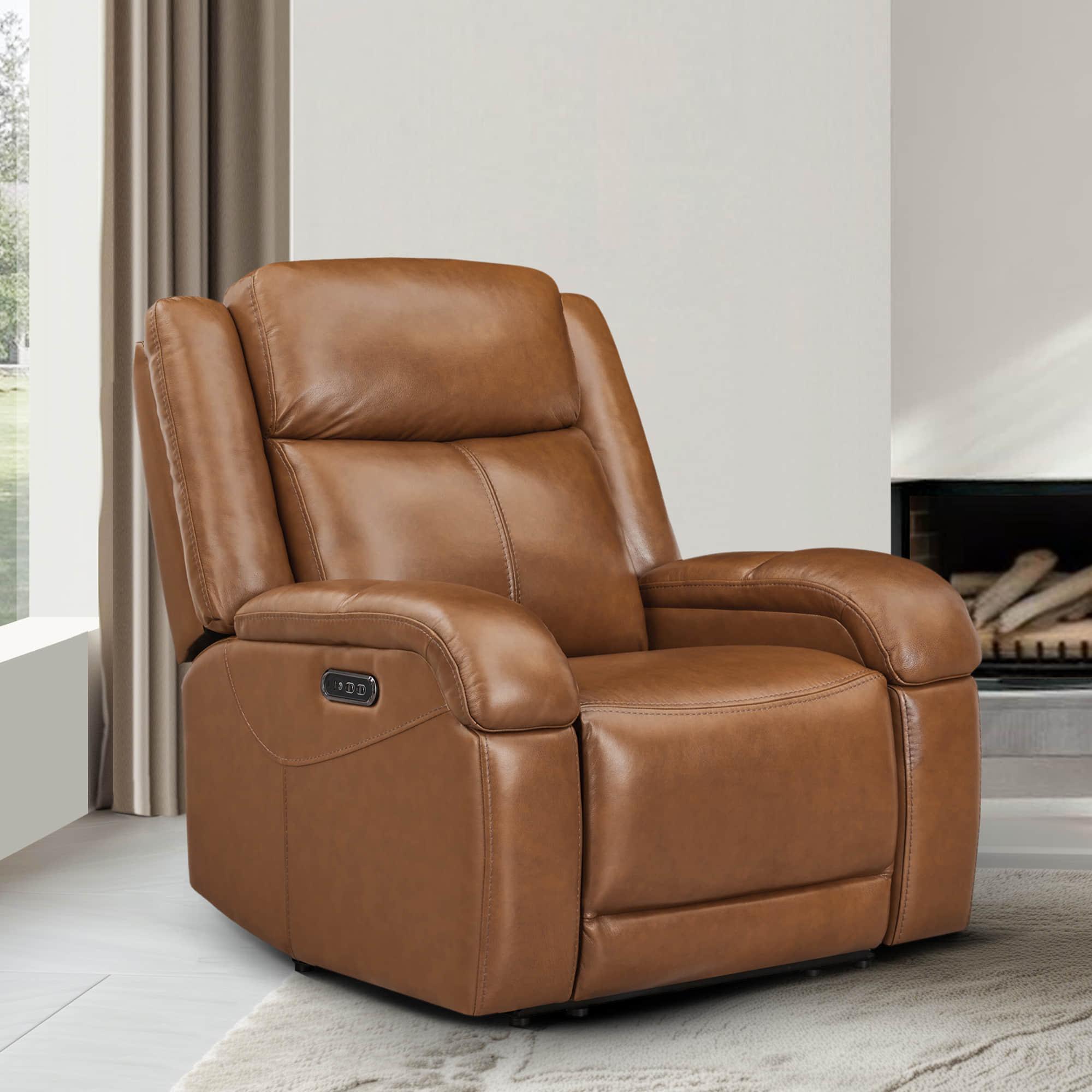
The mechanism is the part of the chair that does the work, and the choice between manual and power versions comes down to how you live rather than which is more luxurious. Manual recliners use a lever or a push-back motion to recline. They have fewer parts to fail, cost less, and work without electricity. Power recliners use motors to move the backrest and footrest, often adding powered headrests or lumbar adjustment.
Think honestly about mobility and frequency of use. For someone with limited grip strength or joint pain, a power recliner turns a daily effort into a single button press. For a guest room where the chair is used occasionally, a manual model is simple and dependable. Power chairs also make it easier to find a precise angle rather than settling for one of a few preset positions, which matters if you share the chair with someone of a different size.
Whichever you choose, operate the mechanism several times before buying. It should move smoothly and quietly, without a jolt at either end of the travel. Listen for straining motors or a clunk as the footrest locks. Ask about the cord length and routing as well, because a power chair needs an outlet within reach, ideally hidden so it does not become a trip hazard.
Wall Clearance, Space, and Placement
A recliner extends behind and in front of itself when it opens, and a chair that seems to fit against a wall may not leave enough room for the backrest to tilt. Wall-hugger or zero-wall designs solve this by sliding forward as they recline, which can be the difference between a comfortable chair and a permanent obstacle in a small room. Measure the wall distance the mechanism needs and add room for the footrest to extend without trapping anyone’s legs.
Placement beyond clearance matters too. A recliner works best as a destination seat, angled toward a focal point such as a fireplace or television, with a table nearby for a drink or book. Avoid placing it directly in a walking path, because it will inevitably be open when someone tries to pass. If the chair swivels, consider whether the swivel action would bump into a side table or lamp when turned.
Upholstery and Easy Care
Recliners live in the middle of daily life: snacks, pets, children, and long afternoons all leave their mark. Choose a covering that matches that reality. Leather and faux leather wipe clean easily and develop a comfortable softened feel with use, though they can be cool to the touch at first. Fabric offers warmth and texture, but it should be tight-woven and stain-resistant if the chair is used daily.
Look at the seams along the front edge of the seat and the footrest, since these take the most friction. Even stitching and reinforced corners are a good sign. If the chair has piping, check that it is firmly attached rather than merely decorative. Ask whether cushion covers are removable; some are, which makes a big difference for spill-prone households.
Matching the Chair to the Room
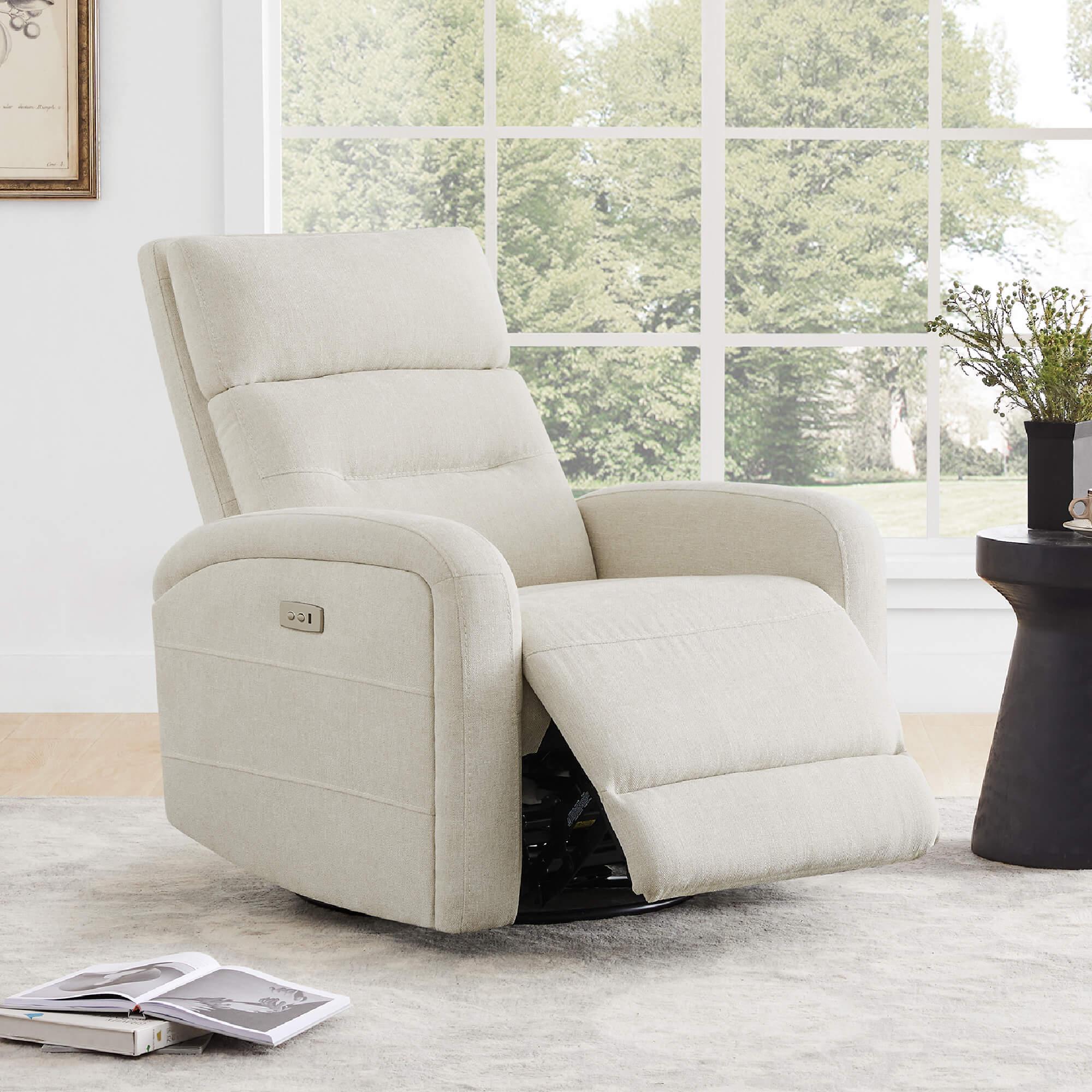
A recliner is bulky by nature, so its proportions and color should calm the space rather than dominate it. In a smaller room, choose a chair with a slim profile and legs that show, which creates a sense of openness. In a larger room, a fuller silhouette with a taller back can hold its own. Think of the recliner as one voice in a conversation with the sofa, rug, and lighting, not as a standalone statement.
Brands that take this balance seriously, like CHITA LIVING, build recliners around living-room proportions rather than forcing every seat into the same oversized mold. Choose a color that repeats something already in the room, such as the frame of a coffee table or a tone in the rug. That small echo makes a large chair feel intentional rather than added at the last minute.
Testing Before You Commit
No amount of research replaces an actual sit. When you test a chair, stay in it for at least ten minutes, ideally longer, and try every position the mechanism offers. Bring the book or tablet you would actually use, and simulate the way you relax at home. Stand up from the chair using your normal method; if it requires a push off the arms or a rocking motion, note how easy that feels.
Finally, check the smaller practical details: whether the footrest locks securely, whether the armrests are at a comfortable height for a mug, and whether the chair squeaks when you shift your weight. Look underneath as well, since the frame often reveals the real quality of construction. A solid base, clean hardware, and a mechanism that is easy to reach and inspect suggest a chair built to be serviced rather than discarded. A recliner should feel like a reliable partner in rest, not a machine you have to manage. Test patiently, choose deliberately, and the chair will reward you with years of quiet support.
The Seat That Earns Its Place
A recliner is not a luxury item so much as a daily investment in recovery. The right one supports your back at every angle, moves smoothly under your control, fits the room without becoming a hazard, and stands up to the wear of real life. The wrong one becomes the chair nobody sits in, or worse, the chair everyone sits in and regrets.
Shop with your body rather than a checklist. Sit longer than feels necessary, test the mechanism until it is second nature, and let the room tell you which proportions will work. Chosen this way, a recliner becomes the quiet center of a living space, ready for the hours when doing nothing is exactly the point.

