

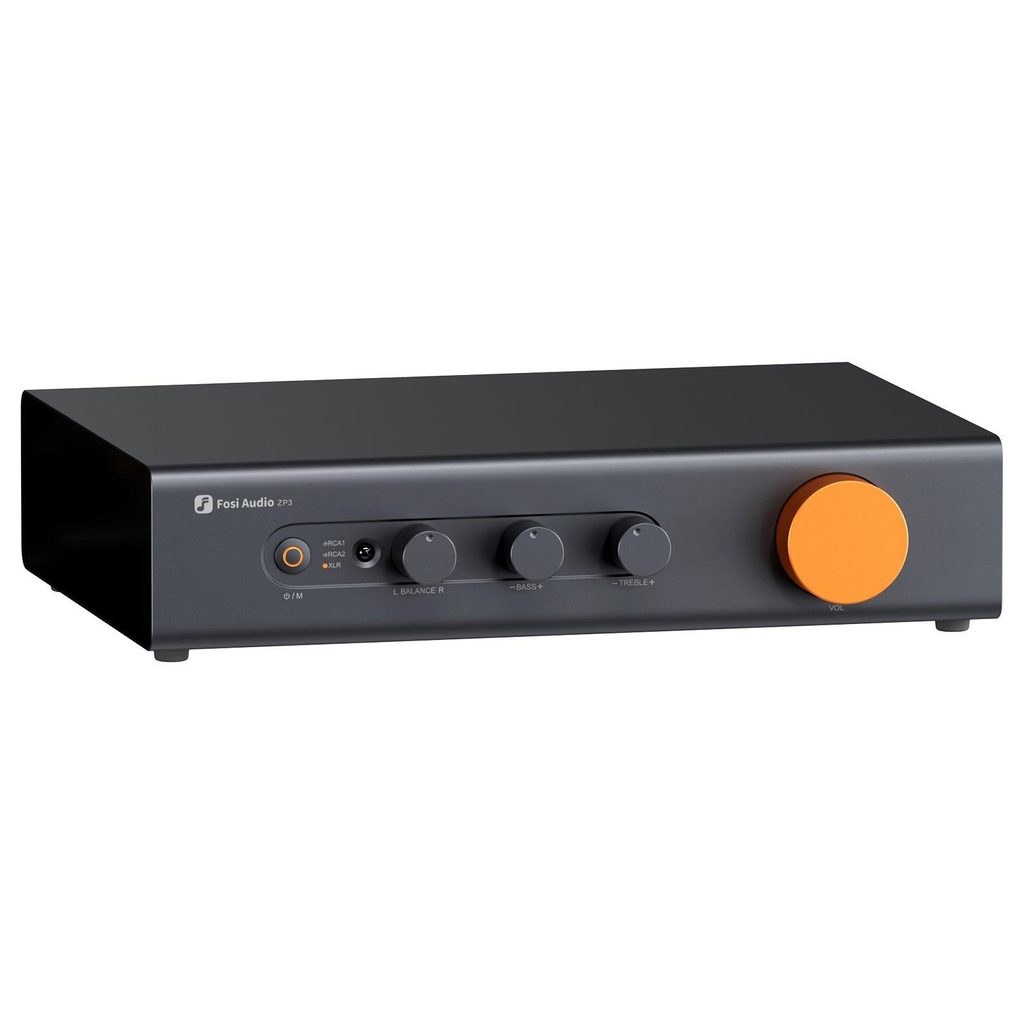
Vinyl is the only mainstream format that arrives deliberately unfinished. When a record is cut, the bass is reduced and the treble boosted, partly to save groove space and partly to keep the needle tracking. Play that groove back raw and it sounds thin, bright, and wrong. Something has to undo the trick before the music reaches your speakers, and that something is the phono stage.
In this guide we explain what phono preamplifiers do, why every turntable needs one, and how to tell whether the one you already own is doing its job. Along the way we will clear up the two questions every new vinyl listener asks: why a turntable cannot plug into a normal input, and whether the little box in your chain is worth upgrading. The short answer to the second question is that good phono preamplifiers are the cheapest real upgrade in vinyl.
Why Records Need Special Help
A cartridge is a tiny generator. As the stylus rides the groove, it produces a signal measured in thousandths of a volt, far below what an amplifier expects. On top of that, the signal is frequency-skewed by design. A phono stage solves both problems in one box: it boosts the signal to line level and applies the reverse equalization that restores the original balance.
Skip the stage and the result is unmistakable: quiet, tinny music with no bass weight. Newcomers often blame the turntable or the speakers, but the missing piece is almost always this one box. Once it is in place, records suddenly sound like records: full, warm, and properly weighted. That transformation is the whole reason phono preamplifiers exist, and why no vinyl setup is complete without one.
RIAA Equalization in Plain Terms
RIAA is simply the name of the standard curve used when cutting and playing records. During cutting, bass is cut by a fixed amount and treble boosted; during playback, the phono stage applies the exact mirror image. The two curves cancel out, leaving the music as the artist mixed it. Every record made since the 1950s uses this standard, which is why one stage works for your whole collection.
You never need to adjust the curve yourself; it is baked into the circuit. What varies between designs is how accurately they follow it and how quietly they do the job. A stage that tracks the curve loosely will sound either boomy or thin, while an accurate one sounds simply right. When reviewers describe phono preamplifiers as neutral, this accuracy is mostly what they mean.
Moving Magnet vs Moving Coil Basics
Cartridges come in two families, and the difference matters when you shop. Moving magnet cartridges are the common, affordable type: they output a stronger signal and their stylus can usually be replaced cheaply. Moving coil cartridges output far less and cost more, but many listeners prize their detail. The practical consequence is gain: a moving coil cartridge needs much more amplification than a moving magnet one.
Most affordable phono stages are built for moving magnet cartridges, and many offer a switch or setting for moving coil. Before buying, check which type your cartridge is; it is printed on the cartridge body or in the turntable manual. Buying a stage without enough gain for a moving coil cartridge is the most common mismatch in vinyl, and it leaves music frustratingly quiet. Fortunately, flexible phono preamplifiers with both settings remove the guesswork.
Where It Fits in Your System
The phono stage sits between turntable and amplifier: turntable cables into the stage, stage output into a line input on your amplifier or receiver. Some turntables have a stage built in, switched by a PHONO/LINE selector; some amplifiers have a dedicated phono input, which means the stage is inside the amplifier. You need exactly one stage in the chain, never two and never none, so check both devices before adding a separate box.
If your turntable already has a stage switched on and your amplifier also has a phono input, use one or the other, not both stacked. Double equalization sounds muffled and wrong. A separate box earns its place when neither built-in option sounds good, or when you want the flexibility to match a new cartridge. In that case, phono preamplifiers with adjustable gain and loading are worth the extra money.
Vinyl asks one small favor of your system: undo the cutting trick and raise a whisper to a normal signal. A phono stage does exactly that, and nothing else in the chain can substitute for it. Understand the job, match the stage to your cartridge, and put exactly one in the chain. Do that, and your records will sound the way the people who cut them intended.
When in doubt, ask a dealer for a home trial with your own turntable and records. A short listen in your own room settles more questions than any review.

