

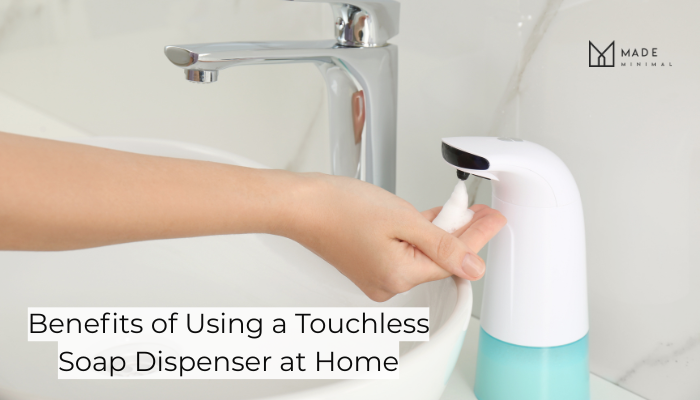
Have you ever thought about how many germs collect on your soap pump after handling raw meat, taking out the rubbish, or cleaning up after pets? Most of us don’t, and that’s the problem.
We’re MadeMinimal, a Brisbane-based Australian store that carries practical home hygiene products, so we think about this often.
The thing is, every time you press a traditional soap dispenser with dirty hands, bacteria from raw foods, pet waste, or dirty laundry transfer right onto the pump. COVID made this problem harder to ignore, especially since UNICEF found that regular handwashing with soap lowers infection risk by 36%.
In this article, we’ll cover how an automatic hand soap dispenser reduces cross-contamination, saves soap, and helps you keep a cleaner home.
Why Automatic Soap Dispensers Improve Hygiene Better Than a Traditional Soap Dispenser
An automatic hand soap dispenser removes the need to touch anything while washing your hands. That one change reduces germ transfer right at one of the most common contact points.
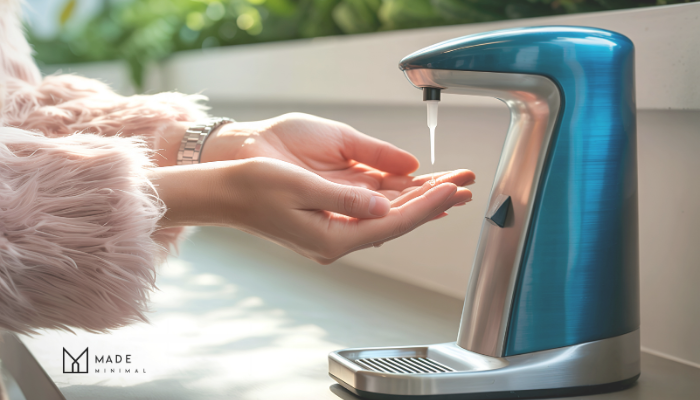
Here is how it works in everyday use and where it has the greatest impact in your home.
How a Touchless System Reduces Cross-Contamination
Touchless dispensers have a small infrared sensor built into the front of the unit. When you place your hands underneath the nozzle, the sensor detects movement and sends a signal to an internal pump. That pump then releases a pre-measured amount of soap, all without you touching anything.
On the other hand, with a regular pump, each person leaves behind bacteria from their hands, whether from raw meat, soil, or bathroom surfaces. The next person then picks up those germs before they even start washing.
A touchless system breaks that cycle and keeps your kitchen sink and bathroom surfaces cleaner between uses.
Everyday Situations Where Touch-Free Is Important
Some rooms in your home collect more bacteria than others, and the busiest spots tend to be the worst. These are the areas where a touchless soap dispenser really earns its place:
- Food Preparation Areas: Bacteria from chopping boards, benchtops, and other surfaces spread quickly around the kitchen sink while you cook. But a touchless dispenser at the sink lets you wash up mid-task without spreading anything further.
- Raw Meat and Raw Foods: The risk of bacteria spreading is even higher when raw meat is involved. Handling chicken, mince, or seafood introduces bacteria like Salmonella and E. coli directly to your hands. Going hands-free at the tap means those germs never reach a shared pump.
- Caring for Children: A sensor soap dispenser makes handwashing easier for kids who come back from daycare, playgrounds, or outdoor play with dirty hands. Since they don’t need to grip or press anything, the process is quicker and more practical for small children.
- Bathrooms and Toilets: Of all places in the home, the bathroom tends to build up bacteria the fastest, especially around high-touch areas. Adding a touchless dispenser here reduces one more surface that germs can settle on between washes.
- Pet Messes and Outdoor Dirt: And then there’s the dirt that follows you inside. Gardening soil, pet waste, and outdoor mud all carry bacteria, so a hands-free option near the laundry or back door keeps those germs from spreading through the rest of the house.
When you look at these situations together, the pattern is obvious. A touchless dispenser removes one of the simplest ways germs travel from person to person at home.
Foaming Soap Dispenser vs. Liquid Soap Dispenser
Now that you know where touchless dispensers help most, the next question is what type of soap works best in one.
A liquid soap dispenser delivers a thick gel straight from the nozzle. It cleans well, but you often need more product to build up a proper lather. Liquid soap also tends to drip and pool around sinks and benchtops, which means more wiping down after every use.
In contrast, a foam soap dispenser mixes air with liquid soap inside the nozzle before it reaches your hands. So the soap comes out as a light, pre-lathered foam. That foam spreads across your skin more evenly and rinses off faster under running water.
Ultimately, the practical difference here comes down to waste and mess.
For most households, we recommend foaming soap, as it uses less product per wash. This means your refill will last longer and you’ll reduce waste over time. It also leaves less residue around the sink.
Health Benefits Often Missed
Fewer germs on shared surfaces means a lower risk of food poisoning, which causes around 4.67 million cases each year in Australia alone. Most of those cases start during food handling and cooking with raw foods at home.
Beyond the kitchen, limiting contamination reduces exposure to dust mites, mould spores, and pet dander. These allergens build up quickly in humid bathrooms. This is even more important when you consider how often people get sick, with adults averaging four to six colds per year and children catching even more.
A touchless system supports healthier handwashing routines that help lower those numbers for the whole family.
Choosing the Right Touchless Soap Dispenser Australia Households Need
The right touchless soap dispenser depends on where you plan to use it, how much space you have, and what your household actually needs.
Let’s look at what to look for when picking one out.
Auto Soap Dispenser Styles for Different Spaces
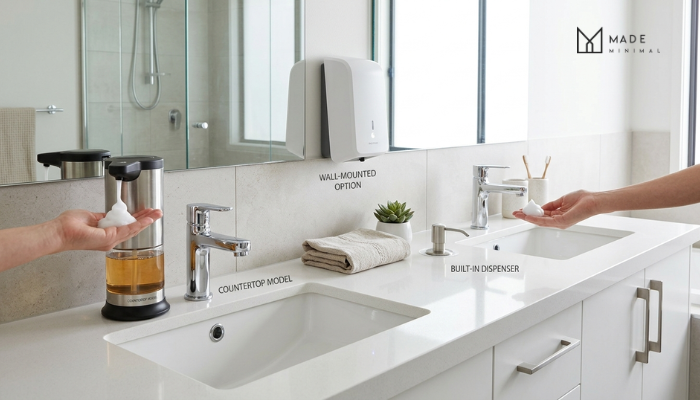
Each room has its own setup, so the style of auto soap dispenser you go with should match the space it’s going in. Below are three common options and what makes each one worth considering:
Bathroom Hygiene Products
A compact touchless dispenser sits neatly on a bathroom vanity without taking up too much room. Most modern designs come in matte black, white, or brushed finishes, so they blend right in with your other bathroom hygiene products.
And since nobody has to press a pump, the vanity stays noticeably cleaner between wipes.
Kitchen Hand Soap Dispenser Solutions
The kitchen is where quick, efficient handwashing really matters, especially when your hands are already messy. A hand soap dispenser near the kitchen sink gives you fast access to soap while handling food, grease, or raw meat juices.
You don’t need to stop and struggle with a pump mid-cooking, and that also means less contamination spreading around food preparation areas.
Wall-Mounted Soap Dispenser Options
If your bench space is already limited, a wall-mounted soap dispenser is a simple way to free up valuable room. A wall mount keeps the countertop clear and makes it much easier to wipe down the surface underneath.
In busy family homes with children, it also places the dispenser safely out of reach of little hands who might empty the whole bottle in one sitting.
A Hand Soap Dispenser Supports Better Home Hygiene Habits Every Day
So, after everything we’ve covered, do you think a touchless soap dispenser really makes that much of a difference? Based on our experience, the answer is yes.
A hand soap dispenser with a sensor takes the effort out of handwashing for the whole family. Children find it easier to use, guests don’t need to touch a shared pump, and everyone ends up washing more consistently as a result. Those small habit changes add up to better hygiene practices across your household.
There’s also the practical side. Fewer soap drips and stains mean your sink and surrounding surfaces stay cleaner for longer. And because you only need one dispenser instead of multiple soap bottles, your bathroom and kitchen feel less cluttered overall.
If you’re ready to make the switch, we stock a wide selection of practical home hygiene products at Made Minimal that help keep your home clean and simple.
Common Buyer Concerns Answered
If you’re still thinking it over, you probably have a few questions. Here are the ones we hear most often.
Are automatic soap dispensers worth the cost?
Most pay for themselves within a few months. Because they release a set amount of soap each time, you end up using less per wash and spending less on refills over time.
How often do batteries need changing?
Standard models run on batteries or rechargeable USB systems. With normal daily use, most only need a battery change every few months, so it’s not something you’ll be dealing with constantly.
Are they difficult to refill?
Not at all. You open the top, pour in your liquid soap or foaming soap, and close it back up. The whole process takes about thirty seconds.
Can children use them easily?
Yes, and that’s actually one of the biggest advantages. Because the sensor does all the work, kids don’t need to grip or squeeze anything. They just hold their hands out, and the soap drops straight in.

