

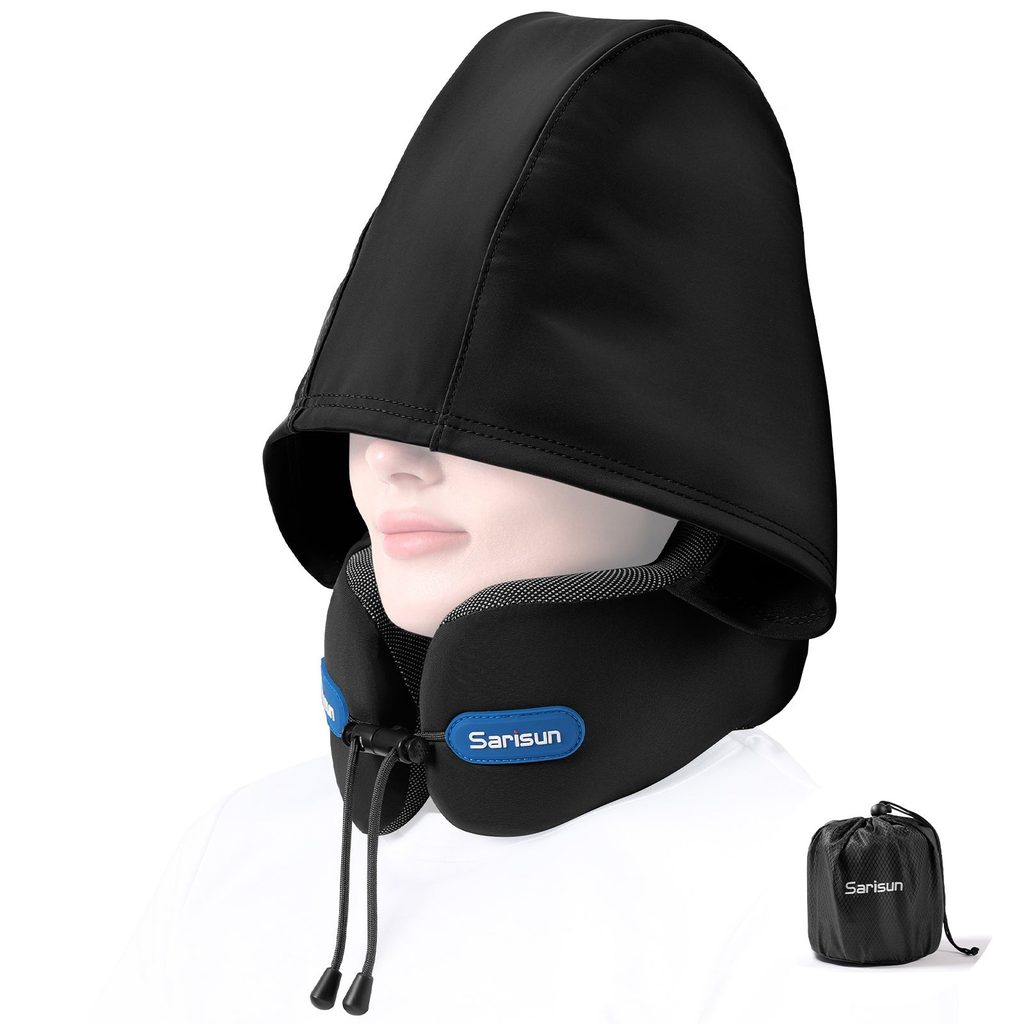
Anyone who travels by plane, train, or long-distance bus has probably tried the same trick at some point: pulling a jacket hood up, or draping a blanket over the head, just to block out light and create a bit of privacy while trying to nap. It’s an awkward workaround, and it rarely stays in place for long. A travel neck pillow with a hood was designed around exactly this instinct, combining neck support with a built-in hood that blocks light and adds a sense of enclosed comfort without needing a separate jacket or blanket. For travelers who struggle to sleep in bright, exposed environments like airport lounges or daytime flights, this small addition changes the entire experience of trying to rest in public. It’s a detail that sounds minor until it’s actually tried, at which point the difference becomes obvious.
Why Light Exposure Ruins Naps More Than People Realize
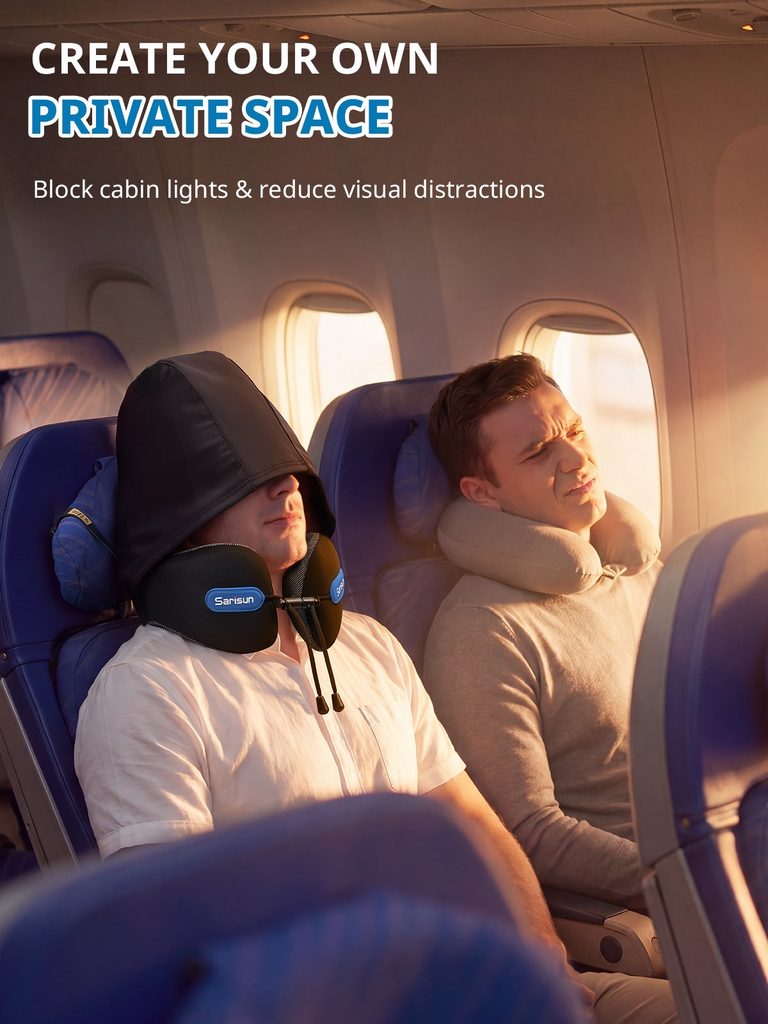
Falling asleep in a lit environment is harder than most people give it credit for. Even with eyes closed, ambient light filters through eyelids and can disrupt the body’s transition into deeper sleep stages, which is part of why daytime naps on trains or afternoon flights often feel shallow and unsatisfying. Overhead cabin lights, sunlight through windows, and the glow of nearby screens all contribute to this effect. A hood attached directly to a neck pillow solves this without requiring a separate eye mask, since pulling it up creates an immediate pocket of shade around the face the moment a nap begins.
Comfort Beyond Just Blocking Light
The hood does more than shield the eyes. It also adds a layer of psychological comfort that’s easy to underestimate until experienced firsthand.
A Sense of Enclosed Privacy
Sleeping in public spaces, whether it’s a crowded flight or a busy train car, can feel exposed in a way that makes it hard to fully relax. A hood creates a small, personal enclosure that reduces the feeling of being watched or overly visible while dozing off. This sense of privacy, even if largely psychological, can make it noticeably easier to drift off compared to sitting fully exposed under bright cabin lighting.
Warmth Where It’s Needed
Cabin temperatures on planes and trains can swing unpredictably, and a hood adds a bit of warmth around the head and ears without needing a separate hat or scarf. For travelers who run cold, especially on overnight flights where cabin crews often lower the temperature, this built-in warmth is a practical bonus layered on top of the light-blocking benefit.
What to Look for in a Hooded Design
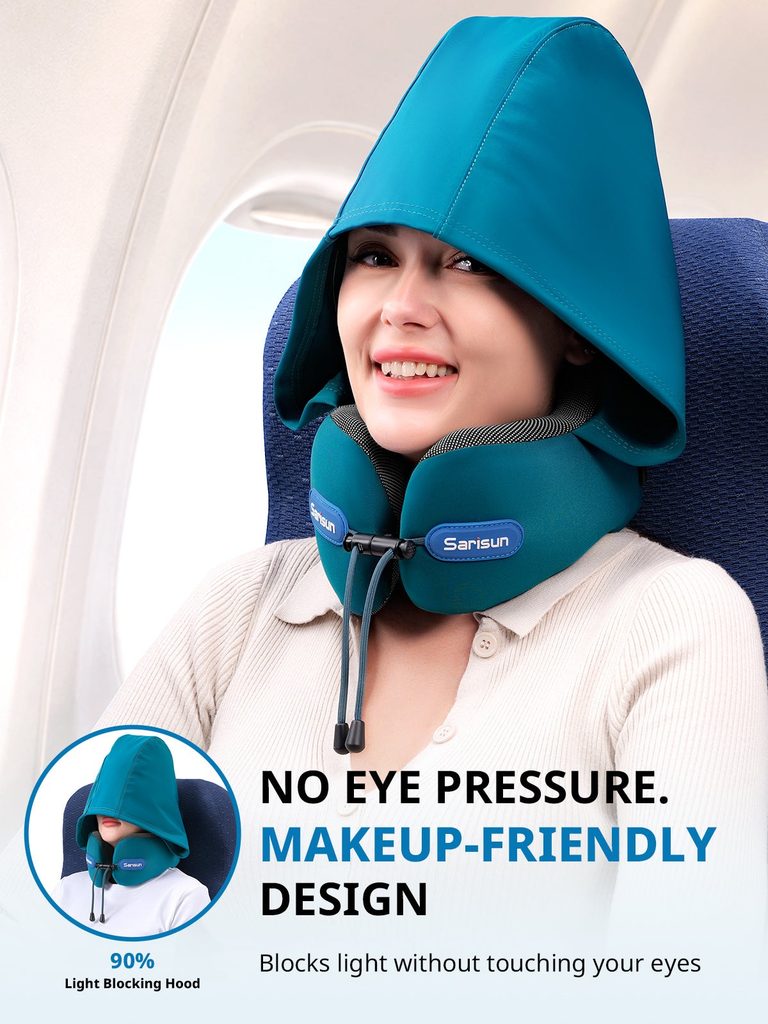
Not every hooded pillow is built the same way, and small design choices affect how well it actually functions during a trip. The hood should sit forward enough to shield the eyes without slipping down over the nose or mouth, which can feel restrictive rather than comforting. It also needs to stay attached securely to the pillow itself, since a hood that flops loose defeats the purpose the moment someone shifts position during sleep. A travel neck pillow with a hood built directly into the seams, rather than one that’s simply clipped on as an afterthought, tends to hold its shape and position far better through hours of movement. Sarisun’s hooded design reflects this kind of integrated approach, treating the hood as part of the pillow’s structure rather than a separate accessory.
A Simple Addition That Reshapes How You Nap While Traveling
Once someone tries a neck pillow with a built-in hood, going back to a plain design can feel like a step backward. Blocking out light, adding a sense of privacy, and providing a bit of extra warmth all work together to make napping in transit feel far less like a struggle against a bright, exposed environment. It’s a straightforward idea, but one that addresses a genuine gap in how most travel pillows are designed, making it worth considering for anyone who regularly tries and fails to nap while surrounded by light and noise.

